

This article may contain references to products or services from one or more of our advertisers or partners. We may receive compensation when you click on links to those products or services. Nonetheless, our opinions are our own.
The information presented in this article is accurate to the best of our knowledge at the time of publication. However, information is subject to change, and no guarantees are made about the continued accuracy or completeness of this content after its publication date.

The Trump administration’s announcement of the Stargate project—a joint venture among OpenAI, SoftBank, and Oracle that will initially invest $100 billion to build artificial intelligence infrastructure, including data centers nationwide—underscores a transformation occurring across the private investment world. This surge in infrastructure spending arrives as family offices recalibrate portfolios and seek opportunities in sectors offering both stable cash flows and exposure to transformational technologies.
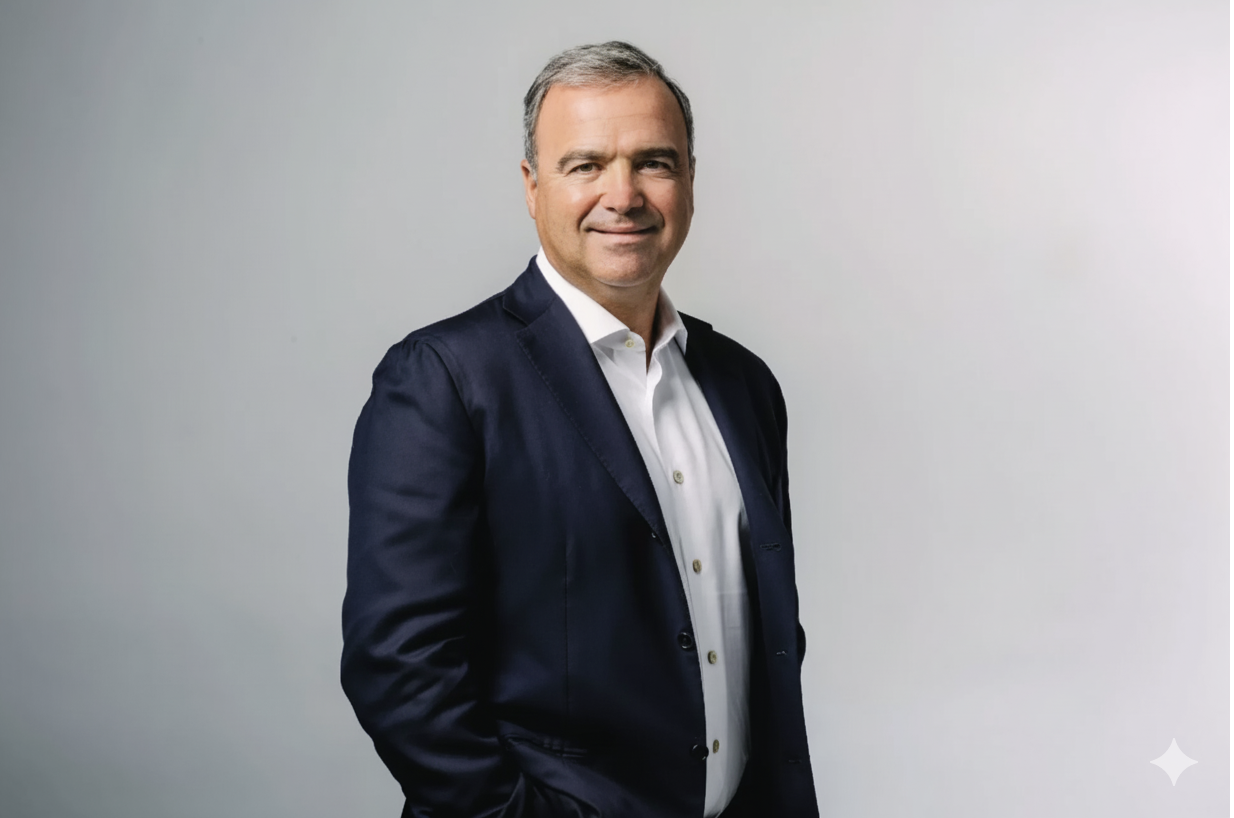
Jean-Pierre “JP” Conte, managing partner of a San Francisco-based private equity firm and founder of his family office Lupine Crest Capital, has built a three-decade career identifying precisely these types of inflection points. His investment philosophy centers on partnering with exceptional management teams and deploying patient capital into sectors experiencing structural transformation. That approach has positioned him at the forefront of several major shifts in how capital flows into critical infrastructure.
Private infrastructure assets under management have more than quadrupled over the past decade, reaching a record $1.3 trillion as of June 2024, according to Boston Consulting Group. Data center investments alone attracted a record $50 billion in 2024, up from just $11 billion in 2020, driven by artificial intelligence and cloud computing demands.
The Infrastructure Investment Opportunity
Conte launched Lupine Crest Capital in March 2025 to deploy capital across varying asset classes, with particular focus on private equity, real estate, and venture investing. “We are entering a period of exceptional growth for American entrepreneurship and innovation,” Conte stated at the family office’s launch. “There is no better moment than right now to invest in businesses we believe in and give them the boost they need to turn from good to great.”
The firm’s approach demonstrates broader shifts among sophisticated investors. Family offices have increased their exposure to alternative assets substantially, with alternatives now comprising 42 percent of portfolios, up from 39 percent in recent surveys. This reallocation signals growing recognition that infrastructure investments offer distinctive characteristics—stable cash generation, inflation protection, and exposure to structural economic shifts—that traditional asset classes cannot replicate.
Family Offices Embrace Infrastructure’s Potential
The data confirms a pronounced shift toward infrastructure among ultra-high-net-worth investors. BlackRock’s 2025 Global Family Office Survey revealed that 30 percent of single-family offices planned to increase infrastructure allocations through 2026, with 75 percent expressing positive sentiment about the asset class’s prospects. More significantly, family offices intend to increase allocations to both opportunistic infrastructure strategies (54 percent) and value-add strategies (51 percent), drawn by a combination of higher return potential, favorable tailwinds, and operational flexibility.
Lili Forouraghi, BlackRock’s Head of Family Office, Healthcare, Endowment and Foundations, noted that infrastructure has evolved from niche investment to portfolio cornerstone. The asset class’s ability to generate stable cash flows, serve as a portfolio diversifier, and demonstrate resilience during market volatility has attracted institutional capital at unprecedented scale.
Jean-Pierre Conte’s investment philosophy aligns with this institutional shift. His approach emphasizes identifying structural growth opportunities rather than concentrating resources in narrow market segments—a methodology refined through decades of sector-focused investing in healthcare, financial services, software, and industrial technology. This disciplined framework prioritizes sustainable value creation.
Voted "Best Overall Budgeting App" by Forbes and WSJ
Monarch Money helps you budget, track spending, set goals, and plan your financial future—all in one app.
Get 50% OFF your first year with code MONARCHVIP


Infrastructure Investment in Practice
Lupine Crest Capital’s first international venture demonstrates how this philosophy translates into action. In May 2025, the family office joined eB Capital and contributed to a R$640 million ($115 million USD) investment in Brazilian waste-to-energy company Orizon Valorização de Resíduos. Orizon operates 17 Ecoparks throughout Brazil, processing waste from millions of Brazilians while capable of generating 800,000 MWH annually—equivalent to the energy demand of a city of one million people.
“Orizon has revolutionized the ability to not only process waste, but to profitably create renewable raw materials that serve as substitutes for fossil fuels,” Conte remarked. The investment supports expansion of biomethane initiatives and sector consolidation, positioning the company within Brazil’s climate investment agenda. This transaction exemplifies infrastructure investment at the intersection of environmental sustainability, energy transition, and operational cash flow generation—themes increasingly central to institutional allocators.
The Orizon investment demonstrates Conte’s methodology of identifying companies that combine proven operational capabilities with exposure to long-term secular trends. Waste-to-energy infrastructure addresses multiple investment theses simultaneously: rising energy demand, circular economy imperatives, and regulatory pressure to reduce carbon emissions. These converging forces create what sophisticated investors term “multiple paths to value creation”—scenarios where portfolio companies can succeed through various market developments rather than depending on a single outcome.
Data Centers and the Digital Infrastructure Transformation
The infrastructure investment opportunity extends well beyond traditional sectors. Private equity deployed over $108 billion into data centers and related markets in 2024—more than triple the previous year’s investment, according to PitchBook data. This capital surge signals recognition that data centers have evolved from technical infrastructure into economic backbone, powering everything from artificial intelligence to e-commerce.
Boston Consulting Group analysis indicates that digital infrastructure-focused investment vehicles accounted for 43 percent of new fund launches in 2023, up from just 11 percent in 2021. The shift indicates institutional investors are seeking targeted exposure to data centers rather than treating them as components within broader infrastructure portfolios.
McKinsey projects that companies will invest nearly $7 trillion in capital expenditures on data center infrastructure globally by 2030, with more than 40 percent directed toward the United States. More than $4 trillion will fund computing-hardware investments, with the balance supporting real estate and power infrastructure. These figures underscore the magnitude of capital deployment required to support artificial intelligence and cloud computing growth.
Long-Term Value Creation Across Market Cycles
Jean-Pierre Conte’s investment methodology emphasizes operational improvement and collaborative partnerships rather than financial engineering or short-term arbitrage. This approach has proven effective across multiple technological transformations and economic cycles. His focus on “partnering with the top operating talent to lead the companies” recognizes that sustainable value creation requires management teams who understand their markets rather than externally imposed operational changes.
The human capital dimension distinguishes Conte’s approach from purely financial investors. He has articulated a philosophy that views exceptional management teams as the primary driver of value creation—more consequential than market timing, leverage optimization, or financial structuring. This people-centered investment thesis requires extensive due diligence on organizational culture, leadership depth, and operational capabilities before committing capital.
The convergence of infrastructure investment themes—from AI-driven data centers to waste-to-energy platforms—represents a broader recalibration among sophisticated investors. Family offices managing a combined $3.1 trillion in 2024, up 63 percent from 2019 according to Deloitte estimates, possess both the capital and the long-term investment horizons to pursue these opportunities. Their patient capital approach enables investments in infrastructure projects that may require years to reach full operational capacity and generate optimal returns.
Jean-Pierre Conte’s three-decade track record transforming companies into industry leaders through sustained operational guidance positions Lupine Crest Capital to capitalize on infrastructure’s current inflection point. His emphasis on sectors experiencing structural transformation—whether through technological advancement, regulatory change, or demographic shifts—aligns with the $100 billion-plus opportunities emerging across infrastructure investing. As family offices continue increasing allocations to opportunistic infrastructure strategies, investment professionals who combine sector expertise with proven value creation capabilities will define the next generation of institutional infrastructure investing.

Reviewed and edited by Albert Fang.
See a typo or want to suggest an edit/revision to the content? Use the contact us form to provide feedback.
At FangWallet, we value editorial integrity and open collaboration in curating quality content for readers to enjoy. Much appreciated for the assist.
Did you like our article and find it insightful? We encourage sharing the article link with family and friends to benefit as well - better yet, sharing on social media. Thank you for the support! 🍉
Article Title: Jean-Pierre Conte’s Infrastructure Investment Philosophy Targets Market Opportunity
https://fangwallet.com/2025/11/30/jean-pierre-contes-infrastructure-investment-philosophy-targets-market-opportunity/The FangWallet Promise
FangWallet is an editorially independent resource - founded on breaking down challenging financial concepts for anyone to understand since 2014. While we adhere to editorial integrity, note that this post may contain references to products from our partners.
The FangWallet promise is always to have your best interest in mind and be transparent and honest about the financial picture.
Become an Insider

Subscribe to get a free daily budget planner printable to help get your money on track!
Make passive money the right way. No spam.
Editorial Disclaimer: The editorial content on this page is not provided by any of the companies mentioned. The opinions expressed here are the author's alone.
The content of this website is for informational purposes only and does not represent investment advice, or an offer or solicitation to buy or sell any security, investment, or product. Investors are encouraged to do their own due diligence, and, if necessary, consult professional advising before making any investment decisions. Investing involves a high degree of risk, and financial losses may occur including the potential loss of principal.
Source Citation References:
+ Inspo
There are no additional citations or references to note for this article at this time.