


This article may contain references to products or services from one or more of our advertisers or partners. We may receive compensation when you click on links to those products or services. Nonetheless, our opinions are our own.
The information presented in this article is accurate to the best of our knowledge at the time of publication. However, information is subject to change, and no guarantees are made about the continued accuracy or completeness of this content after its publication date.

- The Wealth Building Formula™ Made Simple(ish)
- The Formula: Break It Down, Baby
- C is for Cash (and Cash is King)
- T is for Time (and the Magic of Compounding)
- % Return: How Hard Should Your Money Work?
- Real-Life Example: Working the Formula
- How CakeClub® Helps You Work Your Formula
- Your Challenge for This Week
- Closing Thoughts: The Formula for Freedom
- Recommended Reads
The Wealth Building Formula™ Made Simple(ish)
If the thought of math makes you break into a cold sweat, don’t worry. We’re not about to drag you back to high school algebra. But here’s the thing: understanding and working your Wealth Building Formula™ is essential if you want to achieve financial independence.
Think of it like baking a cake. You need the right ingredients (cash), the right baking time (time horizon), and the right temperature (investment return) to get the result you want (financial freedom). But unlike a cake, your financial future doesn’t come with a pre-printed recipe. That’s where the Wealth Building Formula™ comes in.
In this article, we’re breaking down the variables in the Wealth Building Formula™: cash, time, and return. Understanding these will show you how to “work your formula” to make smarter financial choices. And yes, we’ll sprinkle in a little humor because, let’s face it, talking about finances can feel like eating dry toast when it should feel like cake.
The Formula: Break It Down, Baby
Here’s the magic equation: C x T x % Return = $$$
Translation:
* C (Cash): The amount of money you’ve saved or invested, and how much more you have to save every year.
* T (Time): The time frame in which you want to achieve financial independence.
* % Return: The long-term return your investments need to achieve your desired goal.
* $$$: The annual cash flow you need to live the life you want once financially independent.
This formula isn’t one of those vague “rules of thumb.” It’s a personalized roadmap that gives you clarity—and options. Let’s break it down with some real-world scenarios (and a touch of humor, because why not?).
C is for Cash (and Cash is King)
“C” stands for the investable cash you’ve saved to date and the additional amount you must save annually. Think of it as the foundation of your financial cake—it’s what everything else builds on.
Here’s the deal: The more cash you can save now, the easier it will be to reach your goals.
Why? Because more cash means you can either:
- shorten your time frame (T)
- reduce the return (% Return) you need from your investments (this also reduces portfolio risk)
- or if Time or Return On Investment stay the same, you will wind up with a lot more wealth than you need
Example:
Taylor, age 35, wants $100,000/year in retirement cash flow starting at age 60.
After running the formula, Taylor learns they need:
- $3.5 million invested by age 60 to make it happen.
- $30,000/year savings ($2,500/monthly) starting now to hit that target with an average 7% annual return.
But here’s the kicker: if Taylor can bump their annual savings to $40,000/year ($3,333/monthly), they’ll hit their goal years sooner or need a less risky 5% return on their investments.
Takeaway: The more you save now, the fewer tradeoffs you’ll face later. So yes, max out that 401(k), and don’t leave that employer match on the table, it’s free money!
T is for Time (and the Magic of Compounding)
T is for Time (and Why Compounding Does the Heavy Lifting)
If cash is the ingredient list of your cake, time is the oven. You can have the best ingredients in the world, but if you pull the cake out too early, it is not going to work out the way you hoped.
Time is what allows compounding to happen. Compounding is the process of your money earning returns, and then those returns earning returns of their own. It starts quietly. Almost suspiciously slow. Then, after enough time passes, it takes over the kitchen.
Here’s the part that matters, without the math headache
Let’s assume a reasonable long-term investment return of 8%, at this rate:
Your money doubles about every 9 years
The first decade feels underwhelming
The later decades do the real work
This is why time matters more than intensity. You cannot rush compounding. You can only give it space.
Same cake batter, different bake times
Meet Alex and Sam.
Alex
Saves $10,000 per year from age 25 to 35
Total saved: $100,000
Stops contributing entirely at 35
Leaves the money invested until age 60
Sam
Saves $10,000 per year from age 35 to 60
Total saved: $250,000
Invests consistently for 25 years
Assuming an 8% annual return:
Alex ends up with roughly $1,000,000 by age 60
Sam ends up with roughly $750,000 by age 60
Sam puts in two and a half times more money. Alex still finishes ahead. The difference is not discipline. It is not sacrifice. It is time.
Alex gave compounding 35 years to work. Sam gave it 25. Those extra years quietly did more than an extra $150,000 of contributions ever could.
Takeaway
You do not need to have everything figured out.
You do not need a perfect plan.
You just need to start.
Time is the quiet multiplier in your Wealth Building Formula™. The sooner you turn on the oven, the less effort it takes to get a great result.
Voted "Best Overall Budgeting App" by Forbes and WSJ
Monarch Money helps you budget, track spending, set goals, and plan your financial future—all in one app.
Get 50% OFF your first year with code MONARCHVIP


% Return: How Hard Should Your Money Work?
Now let’s talk about investment return, the oven temperature in your Wealth Building Formula™.
Return matters, but it is also the most misunderstood variable. A higher return sounds great on paper, but it usually comes with higher risk, more volatility, and a bigger emotional toll when markets misbehave.
Think of it like baking a cake at 500 degrees. Yes, it cooks faster. It can also burn, collapse in the middle, or leave you hovering nervously in front of the oven wondering if you ruined everything.
Higher return expectations demand more precision and more tolerance for uncertainty.
Example
Imagine Taylor needs $3.5 million in 25 years to reach financial independence.
Here is how % return changes the workload on Taylor’s savings:
At a 5% average return, Taylor needs to save about $40,000 per year
At a 7% average return, Taylor needs to save about $30,000 per year
At a 9% average return, Taylor could save about $20,000 per year
Same goal. Same timeline. Very different stress levels.
That 9% scenario looks attractive, but it usually requires heavier exposure to volatile assets. That means sharper drops during market downturns and a much higher chance of bailing at the wrong time. In Master Your Cash Flow, Al Zdenek emphasizes that the best return is not the highest possible return. It is the return you can actually live with.
A slightly lower, more consistent return that you stay invested in often beats an aggressive strategy you abandon during market chaos. Compounding only works if you stay in the game.
Takeaway
You do not need to squeeze every possible percent out of the market. You need a return assumption that balances growth, risk, and sleep.
Set your oven to a temperature you can trust. A steady bake beats a scorched cake every time.
Real-Life Example: Working the Formula
Let’s say you’re Samantha, a 40-year-old working mom juggling family expenses and retirement savings. You want $80,000/year in retirement income starting at age 65. Here’s how you’d work the formula:
1. Estimate Your Target Wealth: Using a 4% withdrawal rate, Samantha calculates she’ll need $2 million by age 65.
2. Define Your ‘C’ (Cash Flow Needs): $80,000/year
3. Set Your ‘T’ (Time Frame): 25 years until retirement
4. Run the Numbers:
*If Samantha can save $20,000/year ($1,666.67/month) and earn 6% annually, she’ll reach her goal.
* If she can only save $15,000/year ($1,250/month), she’ll need to earn 8% annually (higher risk).
By understanding how the variables interact, Samantha can make informed decisions. If she wants to reduce risk, she might look for ways to save more (like cutting unnecessary expenses) or extend her timeline.
How CakeClub® Helps You Work Your Formula
CakeClub®, the US-based personal finance app focused on cash flow optimization, card reward optimization, and guilt-free money management support, is built to make your Wealth Building Formula™ clear, practical, and usable in real life.
You can:
* Run the Numbers: Input your goals, time frame, and current savings to the Wealth Building Formula and create different scenarios for yourself.
* Explore Scenarios: Play around with different variables (e.g., saving more, targeting different returns) to see how they impact your plan.
* Track Your Progress: See how your cash flow, savings, and investments are working together monthly using the CakeClub app.
* Follow CakeClub® for helpful advice to Master Your Cash Flow and build smarter money habits.
Think of CakeClub® as a pocket finance coach that helps you connect today’s choices to tomorrow’s freedom.
Your Challenge for This Week
This week, take 15 minutes to work your own Wealth Building Formula™:
1. Define Your $$$: How much annual cash flow do you need to live the life you want in the future?
2. Set Your Time Frame (T): When do you want to achieve financial independence?
3. Estimate Your Cash (C) and % Return: How much have you saved, and what return do you need to hit your target?
Download the CakeClub® app to track and get clear on your monthly spending and savings to help you define your future.
Closing Thoughts: The Formula for Freedom
Understanding the Wealth Building Formula™ isn’t just about numbers, it’s about empowerment. It’s your roadmap for knowing how every dollar you save, every year you wait, and every investment choice you make impacts your future.
So, take control. Start working your formula today, and remember: when it comes to your financial freedom, you deserve to have your cake and eat it too.
Written by Albert J. Zenek, Jr., CPA/PFS

Reviewed and edited by Albert Fang.
See a typo or want to suggest an edit/revision to the content? Use the contact us form to provide feedback.
At FangWallet, we value editorial integrity and open collaboration in curating quality content for readers to enjoy. Much appreciated for the assist.
Did you like our article and find it insightful? We encourage sharing the article link with family and friends to benefit as well - better yet, sharing on social media. Thank you for the support! 🍉
Article Title: Your Wealth Building Formula™ Decoded: Time, Cash, and Compounding
https://fangwallet.com/2025/12/25/your-wealth-building-formula-decoded-time-cash-and-compounding/The FangWallet Promise
FangWallet is an editorially independent resource - founded on breaking down challenging financial concepts for anyone to understand since 2014. While we adhere to editorial integrity, note that this post may contain references to products from our partners.
The FangWallet promise is always to have your best interest in mind and be transparent and honest about the financial picture.
Become an Insider
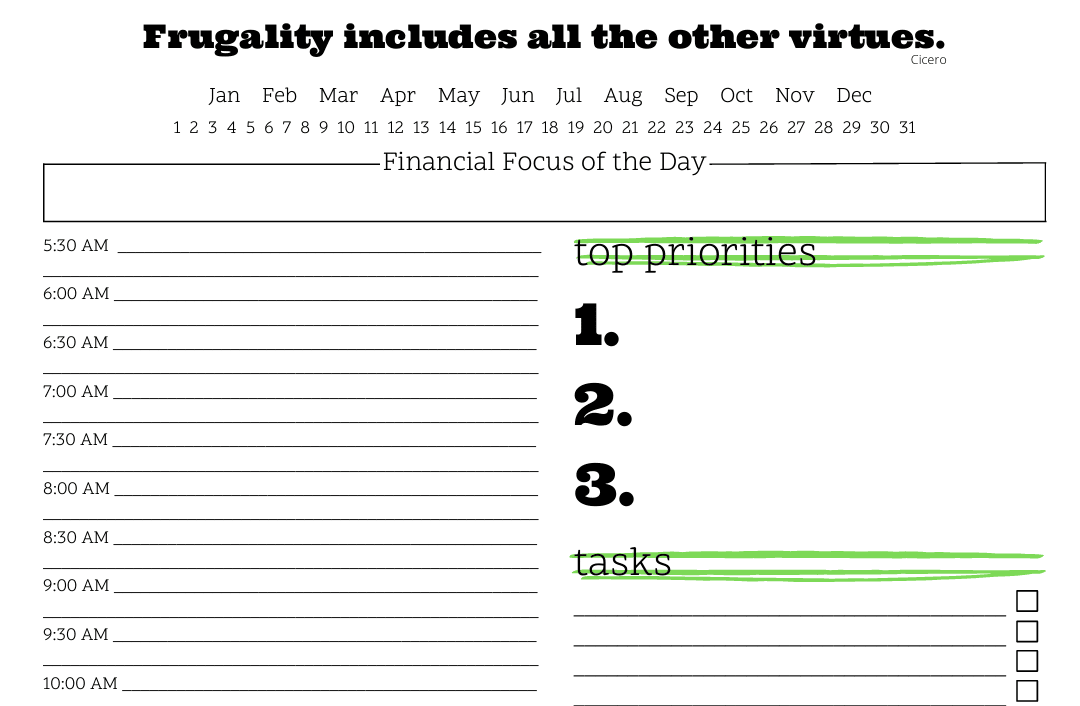
Subscribe to get a free daily budget planner printable to help get your money on track!
Make passive money the right way. No spam.
Editorial Disclaimer: The editorial content on this page is not provided by any of the companies mentioned. The opinions expressed here are the author's alone.
The content of this website is for informational purposes only and does not represent investment advice, or an offer or solicitation to buy or sell any security, investment, or product. Investors are encouraged to do their own due diligence, and, if necessary, consult professional advising before making any investment decisions. Investing involves a high degree of risk, and financial losses may occur including the potential loss of principal.
Source Citation References:
+ Inspo
There are no additional citations or references to note for this article at this time.