


This article may contain references to products or services from one or more of our advertisers or partners. We may receive compensation when you click on links to those products or services. Nonetheless, our opinions are our own.
The information presented in this article is accurate to the best of our knowledge at the time of publication. However, information is subject to change, and no guarantees are made about the continued accuracy or completeness of this content after its publication date.

Most financially literate professionals diversify their investments carefully. You likely track allocation, monitor volatility, and rebalance when markets shift. On paper, your financial life looks measured and intentional. Yet many households, possibly including yours, still depend almost entirely on one income stream to sustain everything else.
While some compare investment returns or even life insurance quotes, far fewer pause to analyse income concentration risk itself. It’s easy to assume steady earnings will continue. But that oversight can quietly undermine an otherwise disciplined financial plan, especially when obligations expand faster than expected.
- The Paradox of Sophisticated Investors With Undiversified Income
- Income Concentration Is a Structural Risk, Not an Emotional One
- Where the Real Fragility Shows Up
- Why Emergency Funds and Investments Don’t Fully Solve the Problem
- Designing a Financial Structure That Doesn’t Rely on Optimism
- Recommended Reads
The Paradox of Sophisticated Investors With Undiversified Income
There’s a quiet contradiction in many high-performing households. On paper, the portfolio looks balanced. Equities, fixed income, perhaps property. Risk exposure appears to be measured and controlled across multiple asset classes. Yet behind that diversified structure sits a single engine powering everything: earned income.
If you’ve built a strong career or business, that income likely feels stable. Long tenure, specialised skills, or consistent revenue can create a sense of durability. Stability becomes assumed rather than stress tested. Because earnings have been reliable for years, the possibility of interruption often feels distant rather than structural.
The imbalance hides in plain sight. Investments may be diversified across sectors and regions, but income remains concentrated in one role, one industry, or one primary earner. If that income stops, portfolio diversification can’t compensate quickly enough.
The blind spot isn’t a lack of intelligence or discipline. It’s confidence in continuity without examining resilience.
Income Concentration Is a Structural Risk, Not an Emotional One
Income concentration risk isn’t about fear-based thinking. It’s about dependency ratios within a household’s financial design. If most obligations rely on one income source, concentration exists regardless of how secure that source feels today. When your commitments depend heavily on continued earnings, the structure is more leveraged than it appears. The higher the income, the more that single stream supports mortgages, education costs, lifestyle spending, and long-term plans.
Mid-career professionals often face the highest exposure. Earnings peak during these years, but so do fixed obligations. A larger home, school fees, business investments, or support for aging parents can all expand commitments. As income rises, financial structures become more complex, even if that complexity isn’t obvious day to day.
Remove the primary income stream, and the system tightens quickly. Cash flow shrinks while fixed commitments remain unchanged. Asset withdrawals accelerate.
Debt obligations don’t adjust automatically. The real question isn’t whether disruption is likely this year. It’s whether the structure could absorb it without forcing difficult trade-offs or delaying long-term goals.
Voted "Best Overall Budgeting App" by Forbes and WSJ
Monarch Money helps you budget, track spending, set goals, and plan your financial future—all in one app.
Get 50% OFF your first year with code MONARCHVIP


Where the Real Fragility Shows Up
Cash Flow Compression
When earned income stops, fixed expenses don’t pause. Mortgage payments, utilities, school fees, and insurance premiums continue. Even a solid savings buffer can deplete faster than expected when obligations remain constant and incoming cash flow falls to zero.
Cash flow compression often begins with discretionary cuts. Dining out, travel, and optional expenses are reduced. Then, savings are tapped to cover routine costs. If the interruption extends, pressure shifts toward longer-term assets. The timeline from stability to strain can be shorter than most assume.
Asset Distortion
Investments are designed for growth and long-term wealth building, not emergency liquidation. Selling assets prematurely can disrupt an otherwise well-structured plan. If markets are down at the same time income stops, forced sales may lock in losses that would otherwise have recovered.
Early withdrawals to replace income distort allocation and reduce future earning potential. What was meant to compound over decades can become a short-term income substitute. That shift may not feel significant in the moment, but over time it can materially change long-term outcomes.
Debt Sensitivity
Debt magnifies income concentration risk. Mortgage obligations remain fixed regardless of employment or business changes. Business owners may face additional exposure through personal guarantees or performance-linked covenants.
Without steady earnings, servicing debt becomes the immediate priority. Restructuring is sometimes possible, but flexibility narrows quickly. Debt doesn’t create fragility on its own. It amplifies income interruption when buffers are limited.
Dependency Multipliers
Financial dependency increases structural pressure. Children, a non-working partner, or shared commitments create layers of reliance on continued income. The more people depend on that earning stream, the greater the embedded concentration risk.
Dual-income households aren’t immune. Often, one income covers most fixed costs while the second supports savings or discretionary goals. If the primary earner’s income stops, the household dynamic shifts rapidly. What appeared diversified may still hinge on one dominant source.
Why Emergency Funds and Investments Don’t Fully Solve the Problem
Emergency funds are essential, but they are temporary buffers rather than structural solutions. Three to six months of expenses can provide breathing room. For higher-income households with larger obligations, even a well-funded reserve may cover less time than expected.
It’s common to assume investments will fill the gap. However, that assumption overlooks structural limitations:
- Liquidity mismatch: Not all assets are easily converted to cash without timing consequences or transaction costs.
- Market timing risk: Selling during downturns can permanently reduce portfolio value and disrupt long-term projections.
- Capital erosion: Using long-term investments to replace income reduces future growth potential.
- Scale of reserves required: Fully self-insuring income risk demands significant idle capital.
In practice, relying solely on savings and investments means absorbing the shock internally. For many professionals, that requires a level of capital cushion that isn’t realistic without sacrificing growth opportunities or retirement objectives. A buffer helps, but it doesn’t remove concentration risk. It only buys time.
Designing a Financial Structure That Doesn’t Rely on Optimism
A resilient financial structure separates wealth creation from income dependency.
Investments grow assets. Savings manage liquidity. But income risk requires careful consideration. Ignoring it doesn’t remove exposure. It assumes continuity without stress testing the design.
Rather than holding excessive cash or relying entirely on selling assets, you may decide to incorporate tools designed to address income interruption directly. This isn’t about expecting the worst. It’s about making sure the progress you’ve worked hard to build isn’t undone by a single unexpected event.
It may be worth asking yourself a few questions. What percentage of your fixed obligations depends on current earnings? How long could your household operate without earned income before assets must be sold? Would long-term goals remain intact, or would they need to be revised under pressure?
Financial maturity isn’t measured only by portfolio growth. It’s reflected in structural resilience. When a plan accounts for both market volatility and income continuity, it shifts from optimistic to durable. That shift often marks the difference between a strategy that performs well in theory and one that holds firm when tested.

Reviewed and edited by Albert Fang.
See a typo or want to suggest an edit/revision to the content? Use the contact us form to provide feedback.
At FangWallet, we value editorial integrity and open collaboration in curating quality content for readers to enjoy. Much appreciated for the assist.
Did you like our article and find it insightful? We encourage sharing the article link with family and friends to benefit as well - better yet, sharing on social media. Thank you for the support! 🍉
Article Title: Income Concentration Risk: The Blind Spot In Personal Financial Planning
https://fangwallet.com/2026/03/09/income-concentration-risk-the-blind-spot-in-personal-financial-planning/The FangWallet Promise
FangWallet is an editorially independent resource - founded on breaking down challenging financial concepts for anyone to understand since 2014. While we adhere to editorial integrity, note that this post may contain references to products from our partners.
The FangWallet promise is always to have your best interest in mind and be transparent and honest about the financial picture.
Become an Insider
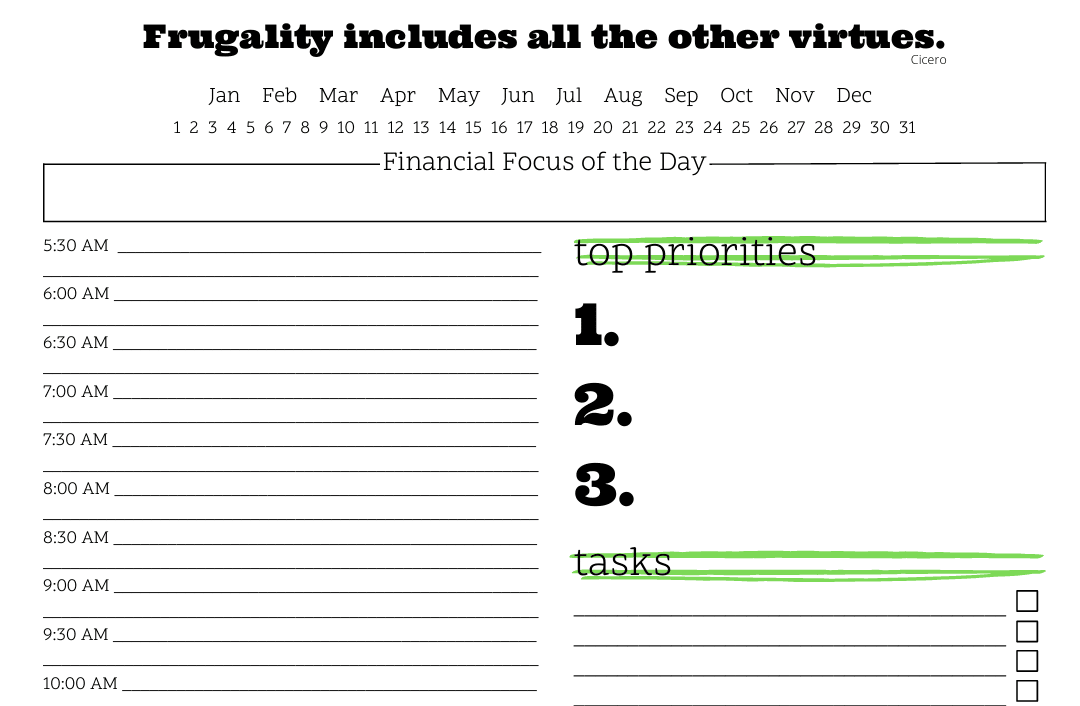
Subscribe to get a free daily budget planner printable to help get your money on track!
Make passive money the right way. No spam.
Editorial Disclaimer: The editorial content on this page is not provided by any of the companies mentioned. The opinions expressed here are the author's alone.
The content of this website is for informational purposes only and does not represent investment advice, or an offer or solicitation to buy or sell any security, investment, or product. Investors are encouraged to do their own due diligence, and, if necessary, consult professional advising before making any investment decisions. Investing involves a high degree of risk, and financial losses may occur including the potential loss of principal.
Source Citation References:
+ Inspo
There are no additional citations or references to note for this article at this time.