
This article may contain references to products or services from one or more of our advertisers or partners. We may receive compensation when you click on links to those products or services. Nonetheless, our opinions are our own.
The information presented in this article is accurate to the best of our knowledge at the time of publication. However, information is subject to change, and no guarantees are made about the continued accuracy or completeness of this content after its publication date.

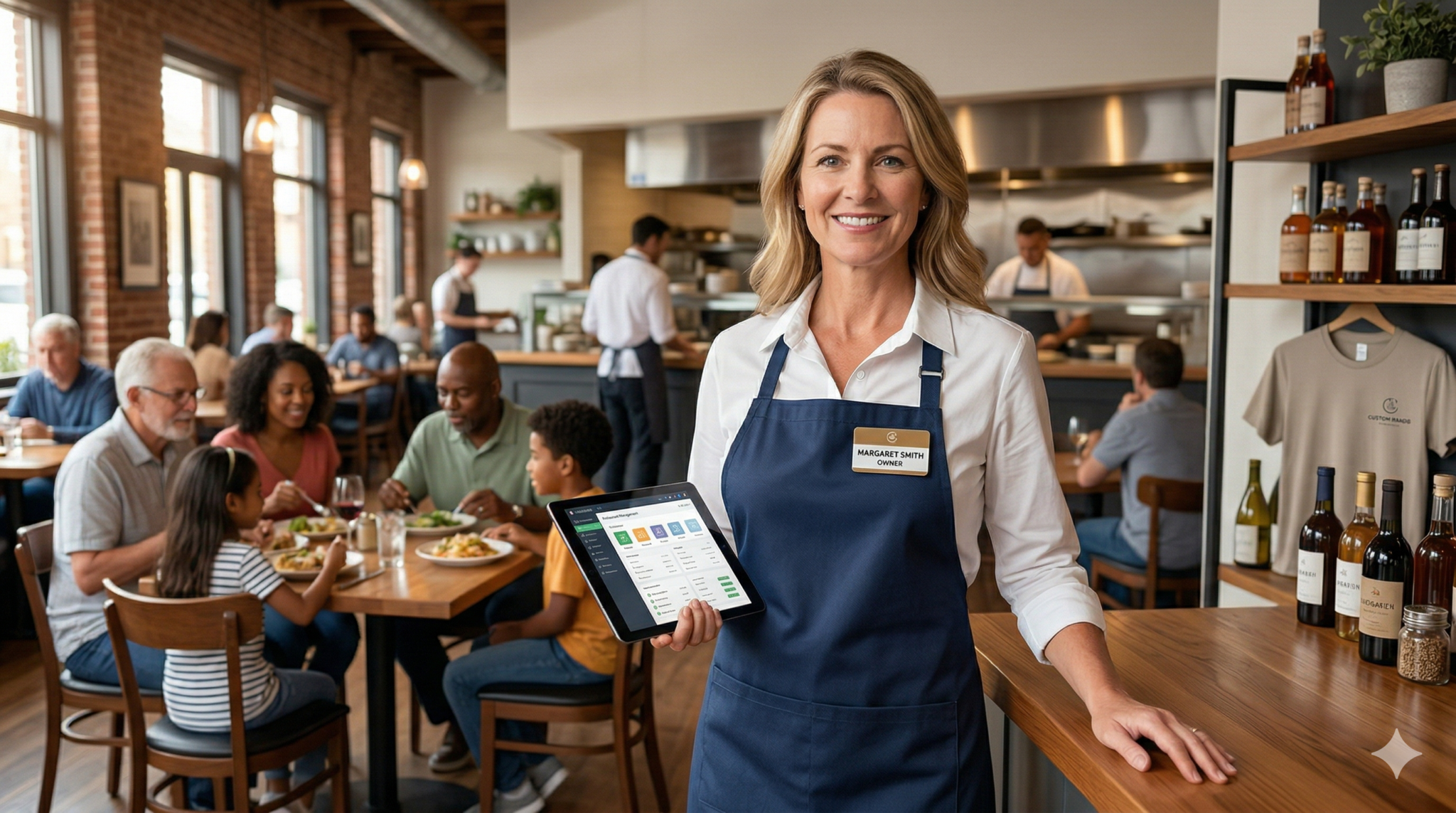
Passive income is one of the most misunderstood concepts in hospitality. Most advice on the topic comes from real estate investors or online creators, not from people who have spent a Friday night managing a full house, a shorthanded kitchen, and a broken POS system at the same time. Restaurants are hands-on by nature, and pretending otherwise sets owners up for disappointment.
But some restaurant owners do manage to reduce their daily involvement without watching revenue collapse. The difference isn’t a secret income stream. It’s how they manage operations.
In restaurants, passive income doesn’t mean stepping away completely. It means building systems that allow the business to run without constant intervention, predictable processes that produce consistent results even when you’re not in the building.
What Passive Income Actually Means in Restaurants
Passive income in a restaurant context isn’t about collecting checks while someone else runs everything. That’s a management structure, and it requires trust, training, and often a GM salary that eats into whatever you hoped to earn passively.
Real passivity in this business looks more like reduced daily decision-making. It’s knowing that orders get taken, invoices get processed, and cash flow gets tracked without you personally initiating each one. The goal isn’t absence. It’s oversight instead of execution.
Owners who get this right tend to share a few things. Their front-of-house runs on clear processes rather than personality. Their back-of-house follows documented prep and ordering systems. Their financial picture updates automatically, not because they called their accountant.
None of that happens by accident. It happens because they invested time in building systems and, increasingly, in adopting tools that reduce how much human attention routine tasks require.
Stabilizing Customer-Facing Operations
The most common pressure point in a restaurant isn’t the kitchen. It’s the phone. Missed calls during peak hours mean lost orders, frustrated regulars, and staff pulled away from tables to answer questions they’ve already answered a hundred times. That dependency on individual employees for routine customer interactions is one of the biggest barriers to a stable, lower-involvement operation.
Some of the most persistent problems in customer-facing ops include:
- Calls going unanswered during rushes or between shifts
- Staff spending time on repetitive questions about hours, menus, or reservations
- Inconsistency in how orders get taken or confirmed
To reduce that reliance on individual staff for routine interactions, some operators adopt ai for restaurants to handle incoming orders and customer requests more consistently. These systems take calls, confirm orders, and answer standard questions without a human involved, which frees up staff for the work that actually requires them to be present.
The practical outcome is fewer missed calls, fewer errors on phone orders, and less daily management required just to keep customer-facing interactions from falling apart. That consistency is what makes lower involvement possible. Without it, every shift becomes reactive.
Voted "Best Overall Budgeting App" by Forbes and WSJ
Monarch Money helps you budget, track spending, set goals, and plan your financial future—all in one app.
Get 50% OFF your first year with code MONARCHVIP


Reducing Administrative Workload
Administrative tasks are where passive income dreams die quietly. Invoices from suppliers, delivery confirmations, credit applications, expense records, all of it piles up in inboxes and filing systems that nobody has time to organize properly during service hours. Owners who handle this themselves are trading time they could spend elsewhere. Owners who delegate it to staff often find it done inconsistently or not at all.
The problem isn’t motivation. It’s that these tasks are document-heavy, detail-sensitive, and genuinely tedious. A missed line item on a supplier invoice or an incorrectly coded expense can distort your financials for a month before anyone notices.
Administrative tasks, especially document-heavy workflows, are increasingly handled through ai document processing system that reduces manual input and errors. These tools can read invoices, extract relevant data, and route it into accounting or inventory systems without a human transcribing anything. For a restaurant running on thin margins, that reduction in processing time and error rate matters more than most owners realize until they’ve seen it in practice.
Getting administration under control is also a prerequisite for the next challenge. You can’t step back from daily involvement if you’re still manually reconciling paperwork three times a week.
Maintaining Financial Control Without Daily Involvement
Most restaurant owners know their sales numbers. Fewer have a clear, current picture of net cash position, food cost percentage, labor as a share of revenue, or what their actual profit margin looked like last month. That visibility gap is what makes passive income feel risky. You can’t trust a system you can’t see.
The answer isn’t hiring a full-time bookkeeper for every location, though that remains an option. Many owners pick the best ai bookkeeping software to keep track of cash flow and performance without being involved in every transaction. These platforms connect to POS systems and bank accounts, categorize transactions automatically, and generate reports that tell you whether the business is actually performing the way you think it is.
Financial control is what makes reduced involvement sustainable. Without it, stepping back from daily operations just means you find out about problems later. With it, you can spot a food cost spike or a payroll anomaly before it compounds.
That’s a meaningful difference. The goal isn’t to ignore the numbers. It’s to get accurate numbers without spending your mornings manually pulling reports from four different systems.
Building Systems That Scale Without You
Here’s where a lot of restaurant owners hit a wall. They implement a tool for phone orders, another for invoicing, another for bookkeeping, and suddenly they’re managing three separate software subscriptions that don’t talk to each other. The systems meant to create breathing room just add a different kind of overhead.
Scaling a restaurant operation while keeping daily involvement low requires those systems to work together. When they don’t, someone has to manually bridge the gaps, and that someone is usually the owner.
Consider what starts to strain as a single location grows into two or three:
- Staff onboarding processes that existed informally at one location
- Web-based tasks like supplier portals or delivery platforms that can be handled with AI browser automation
- Menu and pricing changes that need to sync across systems
- Reporting that was manageable manually at one site but breaks down at three
As operations grow more complex, some businesses explore custom ai software development to create systems that align with their specific workflows rather than relying on disconnected tools. That’s not always the right move at every stage, but it becomes relevant when off-the-shelf solutions create as many problems as they solve. A purpose-built system that handles order intake, connects to inventory, and feeds into financial reporting as one cohesive flow is a fundamentally different proposition than three tools that each require their own maintenance.
The owners who manage to stay out of daily operations without losing control tend to be the ones who treated systems integration as seriously as they treated staffing.
What Structured Operations Actually Produce
Passive income in a restaurant isn’t a revenue stream you set up once and forget. It’s the result of structured operations that don’t require your constant presence to function. Less chaos doesn’t happen automatically. It’s built through deliberate decisions about which tasks get automated, which get delegated, and which genuinely require an owner’s judgment.
The owners who get there aren’t the ones who stepped away. They’re the ones who built something solid enough to run without them standing in it every day. That’s a different kind of success than a rental property or a dividend portfolio, but it’s real, and it compounds over time as each system reduces the surface area of daily decisions that only you can make.
Control doesn’t require presence. It requires information, consistent processes, and tools that handle routine work reliably. Get those three things right, and reduced involvement stops being a fantasy and starts being an operational reality.

Reviewed and edited by Albert Fang.
See a typo or want to suggest an edit/revision to the content? Use the contact us form to provide feedback.
At FangWallet, we value editorial integrity and open collaboration in curating quality content for readers to enjoy. Much appreciated for the assist.
Did you like our article and find it insightful? We encourage sharing the article link with family and friends to benefit as well - better yet, sharing on social media. Thank you for the support! 🍉
Article Title: How to Manage Passive Income as a Restaurant Owner
https://fangwallet.com/2026/03/29/how-to-manage-passive-income-as-a-restaurant-owner/The FangWallet Promise
FangWallet is an editorially independent resource - founded on breaking down challenging financial concepts for anyone to understand since 2014. While we adhere to editorial integrity, note that this post may contain references to products from our partners.
The FangWallet promise is always to have your best interest in mind and be transparent and honest about the financial picture.
Become an Insider
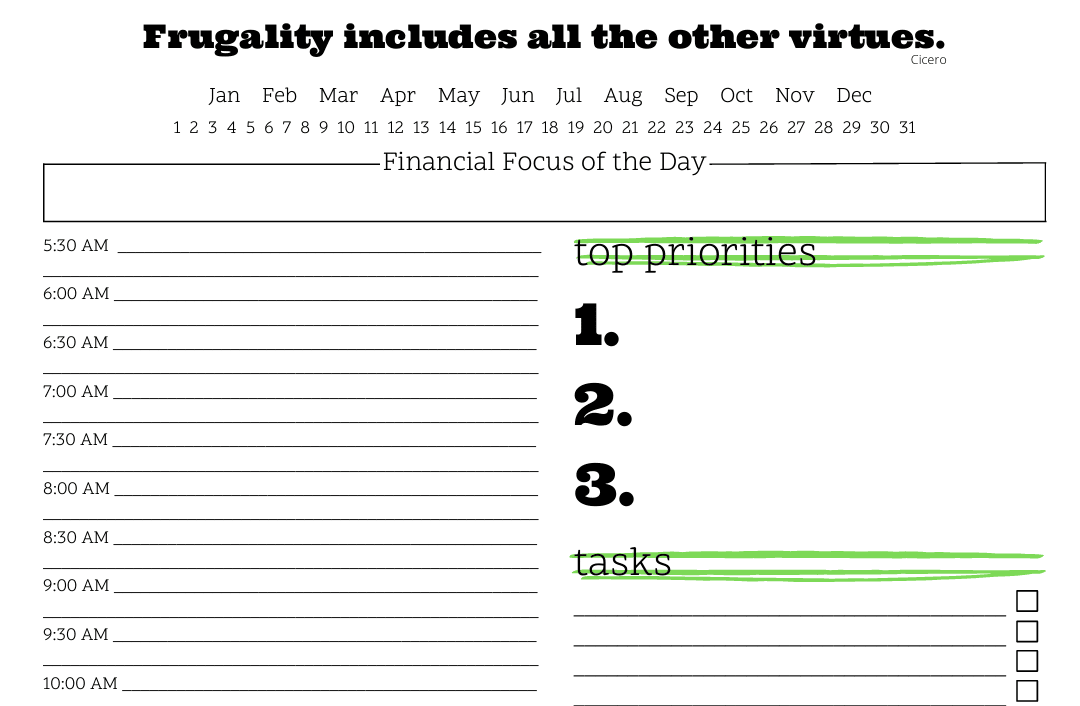
Subscribe to get a free daily budget planner printable to help get your money on track!
Make passive money the right way. No spam.
Editorial Disclaimer: The editorial content on this page is not provided by any of the companies mentioned. The opinions expressed here are the author's alone.
The content of this website is for informational purposes only and does not represent investment advice, or an offer or solicitation to buy or sell any security, investment, or product. Investors are encouraged to do their own due diligence, and, if necessary, consult professional advising before making any investment decisions. Investing involves a high degree of risk, and financial losses may occur including the potential loss of principal.
Source Citation References:
+ Inspo
There are no additional citations or references to note for this article at this time.