

This article may contain references to products or services from one or more of our advertisers or partners. We may receive compensation when you click on links to those products or services. Nonetheless, our opinions are our own.
The information presented in this article is accurate to the best of our knowledge at the time of publication. However, information is subject to change, and no guarantees are made about the continued accuracy or completeness of this content after its publication date.

The holiday season is a time for joy, family, and unfortunately, unexpected expenses. You meticulously budget for gifts, travel, and festive meals, but one subtle cost quietly sneaks up and eats away at your funds: wrapping paper. It’s the unseen expenditure that can easily total $50 to $100 or more annually for an average family.
Imagine slashing that cost by 50% or more this year without sacrificing the look of your gifts. This comprehensive, step-by-step guide will equip you with the mathematical tools and practical shopping strategies of a smart shopper to transform your gift wrapping budget from a spontaneous splurge into a calculated, maximize savings opportunity. It’s time to shift your focus from simply buying paper to wholesale paper purchasing power.
Section 1: The Math Behind the Magic – Calculating True Cost
The biggest mistake consumers make is comparing the price of one roll to the price of another. A $6 roll might seem cheaper than a $15 roll, but the true value lies in the cost-per-square-foot. This simple calculation is your most powerful holiday budgeting weapon.
Step-by-Step Formula: Finding the Cost-Per-Square-Foot
To truly assess the value of a wrapping paper roll, you must calculate how much you are paying for every single square foot of material.
$$Cost\ Per\ Square\ Foot = \frac{Price\ of\ Roll}{Total\ Square\ Footage\ on\ Roll}$$
Actionable Example:
Let’s compare a standard retail purchase with a smart bulk buy.
| Roll Type | Price of Roll | Total Square Footage | Cost Per Square Foot |
| Single Retail Roll | $5.00 | 25 sq. ft. | $5.00 / 25 = $0.20 |
| Bulk Set Roll (Single) | $25.00 (for 5 rolls) | 250 sq. ft. (5 x 50 ft.) | $25.00 / 250 = $0.10 |
By choosing the wrapping paper bulk option, you are paying half the price for the exact same amount of material. This is not about saving $5 on a single purchase; it’s about establishing a system that guarantees significant, sustained holiday expenses reduction.
Key takeaway: Always look at the total square footage on the package, not just the length or width. This measurement is crucial for accurate comparison.
Section 2: Bulk Breakdown – Retail vs. Warehouse vs. Online
To achieve true bulk savings, you need to understand where to shop. The concept of “bulk” varies wildly across different vendors, and only one category typically offers the greatest value for a true bulk buying guide strategy.
Choosing the Right “Bulk” Quantity
For an average family wrapping 30-50 gifts, a smart target for total paper quantity is a minimum of 200-300 square feet. This quantity ensures you have enough for this year with a small, strategic surplus for emergencies or next year’s smallest gifts.
| Category | Typical Bulk Purchase Size | Price per Square Foot Range | Best For: |
| Standard Retail (e.g., Target, Walmart) | “Bonus” rolls, 40-50 sq. ft. | $0.15 – $0.25+ | Convenience, Last-minute needs. Limited true value. |
| Warehouse Clubs (e.g., Costco, Sam’s Club) | Bundles of 4-8 rolls, 200-400 sq. ft. total. | $0.08 – $0.12 | Best value for the average family. Consistent, mid-quality paper. |
| Specialty Online Wholesalers | Cases of 6-12 heavy-duty 60+ ft. rolls, 500+ sq. ft. | $0.05 – $0.10 | Extreme bulk (large families/businesses), specialty prints, highest quality. |
The Smart Strategy: The Warehouse Club or their equivalent online offerings provide the ideal balance of price, convenience, and quantity for most households. They offer true value without requiring you to purchase a commercial quantity of 1,000+ square feet. Look for their seasonal multi-packs early in the season, as they often sell out quickly.
Section 3: Beyond Paper – Maximizing Savings on Accessories
Your holiday budgeting strategy shouldn’t stop at the paper. The accompanying supplies-ribbons, bows, and tags-can add significant cost. Applying the bulk buying guide mentality to these accessories is essential for comprehensive savings.
Smart Shopping for Supplementary Materials
- Bows and Ribbons: Avoid the small, decorative packs of five bows for $3. Instead, purchase large bags of 50-100 peel-and-stick bows or a spool of high-quality wired ribbon (100+ yards) from a craft or warehouse store. The cost difference per bow can be 5x to 10x lower.
- Gift Tags: Pre-packaged sets of 10-20 tags are wasteful. Consider buying large, unadorned rolls of sticky labels (500+ count) or using a hole punch and string on leftover paper scraps to create your own personalized, virtually free tags.
- Tissue Paper: Smart shoppers understand that coordinating ribbons and bows can elevate a gift presentation, and how smart shoppers often order tissue wrapping paper in bulk to ensure a professional look for delicate items without overspending. Buying large packs of 100+ sheets costs pennies per sheet compared to small, ten-sheet packs.
The Power of Consistency and Storage
A subtle but powerful cost savings strategy is to choose a few consistent design themes each year. If all your gifts use two coordinating rolls and one color of ribbon, you avoid the waste of half-used rolls, bags of orphaned bows, and scattered remnants.
Crucially, invest in proper storage. This is the final step in ensuring your savings last. A plastic storage bin designed specifically for wrapping paper rolls prevents crushing, tearing, and exposure to moisture. Paper that is stored correctly is paper you don’t have to re-buy next year, making the purchase of high-quality wrapping paper bulk an investment, not an expense.
Conclusion: Wrapping Up the Savings
Becoming a smart shopper means treating wrapping paper not as a last-minute chore, but as a budgetable commodity. The path to significant maximize savings is clear and follows three simple steps:
- Calculate: Use the Cost-Per-Square-Foot formula to identify the true, lowest price.
- Compare: Focus your shopping on Warehouse Clubs or Specialty Online Wholesalers for true bulk value (200-300+ sq. ft. minimum).
- Store: Invest in good storage to preserve your bulk purchase, ensuring it lasts for years, not weeks.
This approach gives you more than just extra money in your wallet; it gives you the peace of mind that comes from better budgeting and preparation, allowing you to focus on the joy of the season.
Voted "Best Overall Budgeting App" by Forbes and WSJ
Monarch Money helps you budget, track spending, set goals, and plan your financial future—all in one app.
Get 50% OFF your first year with code MONARCHVIP


Recommended Reads
- Uber Eats Shake Shack? How to Get Your Burger Fix Delivered Business
- Uber Eats $50 Savings Hack You Need to Try Business
- Uber Eats Driver Application: Documents Required for Uber Eats Driver Make Money
- Free Uber Eats Gift Cards: Here’s How You Can Earn Them Credit Cards
- Uber Eats Driver Requirements: Uber Eats Driver Qualifications Explained Make Money
- Uber Eats Burger King: Deals, Menu & Delivery Tips Business
- Uber Eats Popeyes: How to Order Your Favorites Fast Business
- How to Maximize Shipt Pay and Tips Make Money
- Uber Eats Wendy’s: Best Deals & Menu Hacks Business
- How to Sign Up for Uber Eats Driving: Apply for Uber Eats Driver in 2025-2026 Make Money

Reviewed and edited by Albert Fang.
See a typo or want to suggest an edit/revision to the content? Use the contact us form to provide feedback.
At FangWallet, we value editorial integrity and open collaboration in curating quality content for readers to enjoy. Much appreciated for the assist.
Did you like our article and find it insightful? We encourage sharing the article link with family and friends to benefit as well - better yet, sharing on social media. Thank you for the support! 🍉
Article Title: Wrap Up Savings: Why Buying Bulk Holiday Paper is Your Best Budgeting Hack
https://fangwallet.com/2025/12/18/wrap-up-savings-why-buying-bulk-holiday-paper-is-your-best-budgeting-hack/The FangWallet Promise
FangWallet is an editorially independent resource - founded on breaking down challenging financial concepts for anyone to understand since 2014. While we adhere to editorial integrity, note that this post may contain references to products from our partners.
The FangWallet promise is always to have your best interest in mind and be transparent and honest about the financial picture.
Become an Insider
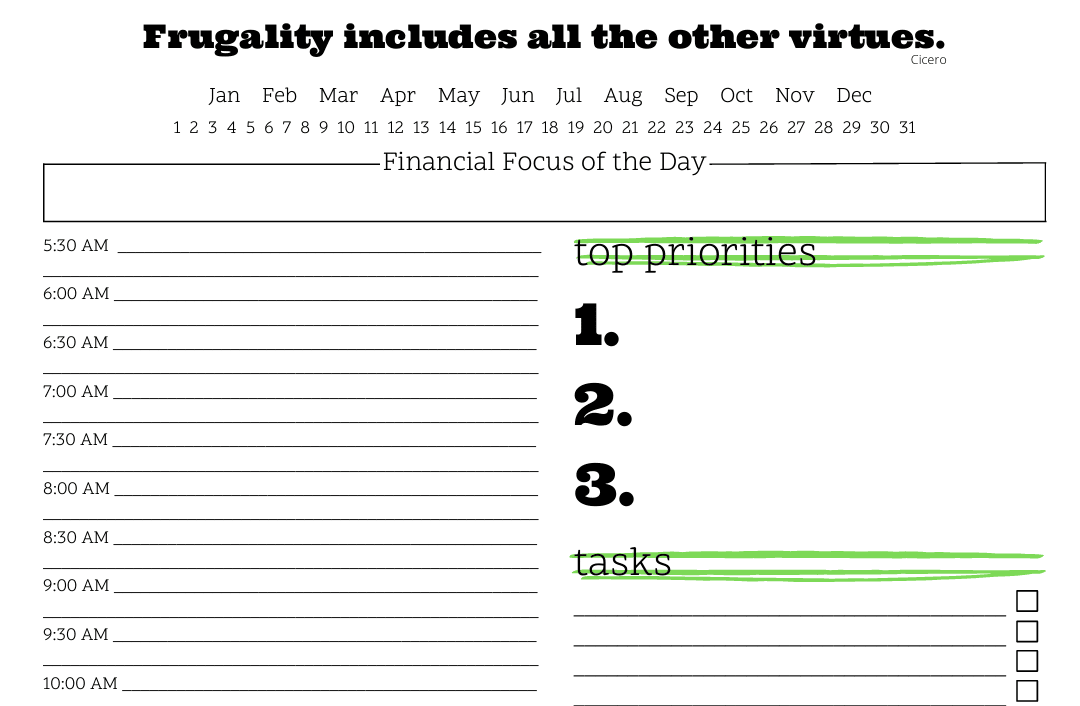
Subscribe to get a free daily budget planner printable to help get your money on track!
Make passive money the right way. No spam.
Editorial Disclaimer: The editorial content on this page is not provided by any of the companies mentioned. The opinions expressed here are the author's alone.
The content of this website is for informational purposes only and does not represent investment advice, or an offer or solicitation to buy or sell any security, investment, or product. Investors are encouraged to do their own due diligence, and, if necessary, consult professional advising before making any investment decisions. Investing involves a high degree of risk, and financial losses may occur including the potential loss of principal.
Source Citation References:
+ Inspo
There are no additional citations or references to note for this article at this time.