


This article may contain references to products or services from one or more of our advertisers or partners. We may receive compensation when you click on links to those products or services. Nonetheless, our opinions are our own.
The information presented in this article is accurate to the best of our knowledge at the time of publication. However, information is subject to change, and no guarantees are made about the continued accuracy or completeness of this content after its publication date.

When I started my marketing agency seven years ago, I thought the hard part would be finding clients. It wasn’t. The hard part was understanding whether I was actually making money.
I’d close a project, celebrate the win, pay contractors, cover costs, and transfer what remained to my personal account. Some months felt profitable. Others left me wondering where all the money went. I had revenue but couldn’t clearly explain my financial position on any given day.
This went on for almost two years before I realized the problem wasn’t my business model – it was my financial visibility.
- Why Revenue Doesn’t Equal Profit
- Separating Business Money From Personal Money
- Understanding Cash Flow Versus Accounting Profit
- Building Reserves Before You Need Them
- The Tax Reserve Discipline
- When to Hire Professional Financial Help
- Delegating Operations for Strategic Capacity
- Small Decisions That Compound
- Starting With One Habit
- Recommended Reads
Why Revenue Doesn’t Equal Profit
The first hard lesson: revenue is not profit. You can have your best revenue month ever and still end up cash-poor if you’re not tracking what stays in the business.
That $50,000 invoice doesn’t mean you made $50,000. After contractor payments, software, taxes, and operating expenses, you might keep $20,000. Or $5,000. Without tracking, you don’t know.
The challenge for small business owners is that everything happens faster and less visibly than traditional businesses. There’s no physical inventory, no daily cash register reconciliation, no obvious moment when you “close the books.” Money moves digitally, and unless you’re actively watching, it’s easy to lose track of your actual financial position.
Separating Business Money From Personal Money
This seems basic, but it’s where most small business financial problems start. Using one account for both creates three problems: you can’t see true business costs, you can’t make informed pricing decisions, and tax time becomes a nightmare of sorting mixed transactions.
The solution: dedicated business checking and savings accounts, business credit card, and a consistent system for paying yourself.
I pay myself the same amount twice monthly, regardless of whether it was a strong or slow revenue month. This forces discipline. If the business can’t consistently support my personal draw, I need to either increase revenue or decrease business expenses.
Understanding Cash Flow Versus Accounting Profit
Your accountant might tell you you’re profitable. Your bank account might disagree. This gap between accounting profit and actual cash flow trips up more small businesses than almost anything else.
You invoice a client $10,000 on March 15th. In accounting terms, you earned that revenue in March. But if the client pays net-30, the cash doesn’t hit your account until mid-April. Meanwhile, your March expenses need to be paid from whatever cash you actually have.
I track cash flow weekly now. Every Monday morning: what came in last week, what went out, current cash position. This takes 10 minutes but provides clarity that monthly reviews miss. When you track monthly, a late payment doesn’t show up as a problem until you’re 30-45 days out. Weekly, you notice on day 10 and can follow up before it becomes urgent.
Building Reserves Before You Need Them
Your business emergency fund protects against lumpy cash flow. I target three months of fixed business expenses in dedicated savings. This means if all revenue stopped tomorrow, I could cover recurring costs for three months while finding new clients.
This buffer fundamentally changes decision-making. When a project ends and you’re choosing between immediately accepting a mediocre opportunity versus taking two weeks to find the right fit, reserves give you space to choose strategically.
Building reserves has to be a deliberate percentage of revenue set aside before other discretionary spending. There’s never “extra” money – just competing priorities.
Voted "Best Overall Budgeting App" by Forbes and WSJ
Monarch Money helps you budget, track spending, set goals, and plan your financial future—all in one app.
Get 50% OFF your first year with code MONARCHVIP


The Tax Reserve Discipline
The single most common financial crisis for new business owners: tax bills they didn’t prepare for. As a business owner, you receive full payment and become responsible for setting aside taxes yourself.
The percentage is higher than most expect. Beyond income tax, you’re paying both employee and employer portions of payroll taxes as self-employed. Plan for 25-35% of revenue going to taxes.
I opened a separate business savings account exclusively for tax reserves. Every payment that comes in, I immediately transfer 30%. It’s no longer part of my operating cash. When quarterly estimated taxes are due, the money is there without scrambling.
When to Hire Professional Financial Help
Many small business owners delay hiring bookkeepers and accountants because it feels like an expense they can’t afford. This thinking is backwards – you hire them so you can make the decisions that let you afford them.
A qualified bookkeeper keeps your books current, categorized correctly, and reconciled. Cost for most small businesses: $200-400 monthly. A CPA who understands small business helps you minimize tax liability legally. Cost: $1,500-3,000 annually.
The temptation is waiting until you’re “bigger.” But you get bigger by making informed decisions, which requires accurate financial information.
Delegating Operations for Strategic Capacity
Here’s where many business owners waste significant time: they handle all financial and operational work themselves because it feels responsible.
Basic financial administration – receipt organizing, expense categorizing, invoice tracking – can be handled by bookkeeping services at $200-500 monthly for straightforward needs.
But there’s a strategic gap many business owners miss. Once your finances are organized, the next bottleneck isn’t financial administration – it’s everything else consuming your time that prevents actually growing the business.
When I finally addressed this in my own business, I realized my finances needed to be tip-top and well-managed. But the real constraint was that I was spending 12-15 hours weekly on operational work across my entire business – calendar management, client communication, proposal development, project coordination, meeting preparation – that kept me from focusing on business development and strategic partnerships.
This is where executive-level support differs from administrative support. A trained executive assistant doesn’t just handle financial operations – they become a strategic partner who manages operational execution across your business so you can focus on work only you can do: closing major deals, building key relationships, developing new offerings, making strategic decisions.
At DonnaPro, we operate as a virtual assistant agency specifically training executive assistants for founder and CEO support. This means handling not just financial operations, but calendar management, client communications, meeting preparation, proposal coordination, and all the operational workflows consuming 12-15 hours of your week. The cost is €2,700 monthly, which only makes sense when you look at the full picture of time reclaimed and business growth enabled.
The math: if you’re reclaiming 15 hours weekly (60 hours monthly) spent on operational work, and your time as a business owner is worth €150-250/hour in business development and strategic work, you’re unlocking €9,000-15,000 in monthly business value. Even conservatively, if those reclaimed hours translate to just €5,000-8,000 in additional monthly revenue through better client work and business development, the support pays for itself while giving you strategic capacity you didn’t have before.
The business owners I know who’ve made this work aren’t using executive support just to handle their books. They’re using it to reclaim the strategic capacity they need to actually scale. The financial operations management is table stakes – the real value is having a strategic partner who handles execution so you can focus on growth.
That said, if you’re early-stage and primarily need help with financial administration specifically, start with bookkeeping services at a lower price point. Executive support through a virtual assistant agency makes sense when operational work across your entire business – not just finances – has become the bottleneck preventing growth.
Small Decisions That Compound
What separates financially healthy small businesses from struggling ones isn’t usually one big decision. It’s the accumulation of small, consistent habits.
Tracking cash flow weekly catches problems early. Setting aside tax reserves prevents year-end crises. Separating business and personal accounts creates visibility. Understanding real costs enables better pricing. Building reserves provides strategic flexibility.
None of these habits are exciting, but they create the foundation that lets everything else work. The business owners I know who’ve built sustainable companies aren’t necessarily the most talented – they’re the ones who developed financial discipline early and maintained it as they grew.
Starting With One Habit
If your business finances need better structure, don’t try to fix everything at once. Pick one habit that addresses your biggest current pain point and implement it this week.
If you’re constantly surprised by cash crunches, start weekly cash flow tracking. If business and personal money are mixed, open dedicated business accounts tomorrow. If you’re spending hours on financial administration, explore delegation options.
The businesses that fail rarely have bad products or insufficient market opportunity. They fail because the founder lost track of the financial reality until it was too late to course-correct. The businesses that succeed have founders who built the unglamorous discipline of financial management into their operations from the start.
Your business can provide the income and impact you’re building it for. But only if you build the financial habits that create visibility, prevent crises, and enable strategic decisions.

Reviewed and edited by Albert Fang.
See a typo or want to suggest an edit/revision to the content? Use the contact us form to provide feedback.
At FangWallet, we value editorial integrity and open collaboration in curating quality content for readers to enjoy. Much appreciated for the assist.
Did you like our article and find it insightful? We encourage sharing the article link with family and friends to benefit as well - better yet, sharing on social media. Thank you for the support! 🍉
Article Title: Smart Financial Habits for Remote Business Owners: Budgeting, Cash Flow & Growth
https://fangwallet.com/2026/02/12/smart-financial-habits-for-remote-business-owners/The FangWallet Promise
FangWallet is an editorially independent resource - founded on breaking down challenging financial concepts for anyone to understand since 2014. While we adhere to editorial integrity, note that this post may contain references to products from our partners.
The FangWallet promise is always to have your best interest in mind and be transparent and honest about the financial picture.
Become an Insider
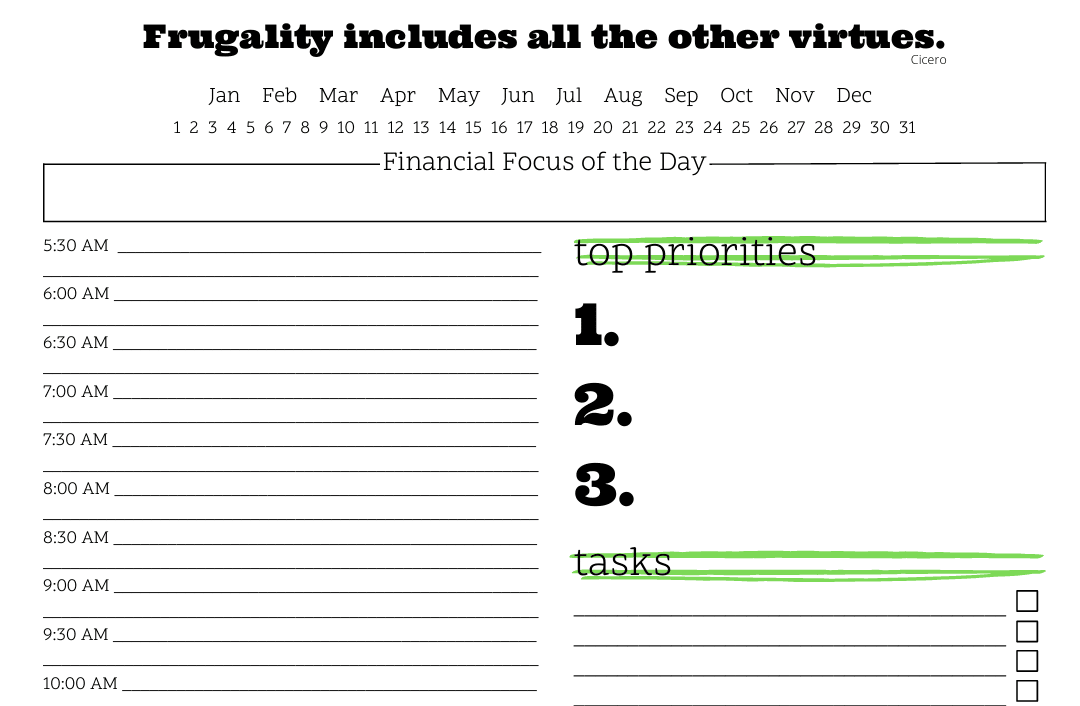
Subscribe to get a free daily budget planner printable to help get your money on track!
Make passive money the right way. No spam.
Editorial Disclaimer: The editorial content on this page is not provided by any of the companies mentioned. The opinions expressed here are the author's alone.
The content of this website is for informational purposes only and does not represent investment advice, or an offer or solicitation to buy or sell any security, investment, or product. Investors are encouraged to do their own due diligence, and, if necessary, consult professional advising before making any investment decisions. Investing involves a high degree of risk, and financial losses may occur including the potential loss of principal.
Source Citation References:
+ Inspo
There are no additional citations or references to note for this article at this time.