
This article may contain references to products or services from one or more of our advertisers or partners. We may receive compensation when you click on links to those products or services. Nonetheless, our opinions are our own.
The information presented in this article is accurate to the best of our knowledge at the time of publication. However, information is subject to change, and no guarantees are made about the continued accuracy or completeness of this content after its publication date.

The silver price reflects far more than a single market number, especially when compared against the underlying spot price used in global trading markets.
Differences between these figures shape how physical silver is evaluated, traded, and collected across different segments of the precious metals space.
Spot price represents the live trading value of silver based on immediate market conditions, while retail pricing introduces additional layers tied to fabrication, demand, and product form.
These differences often lead to variation in how buyers assess value across physical holdings and exchange-based benchmarks.
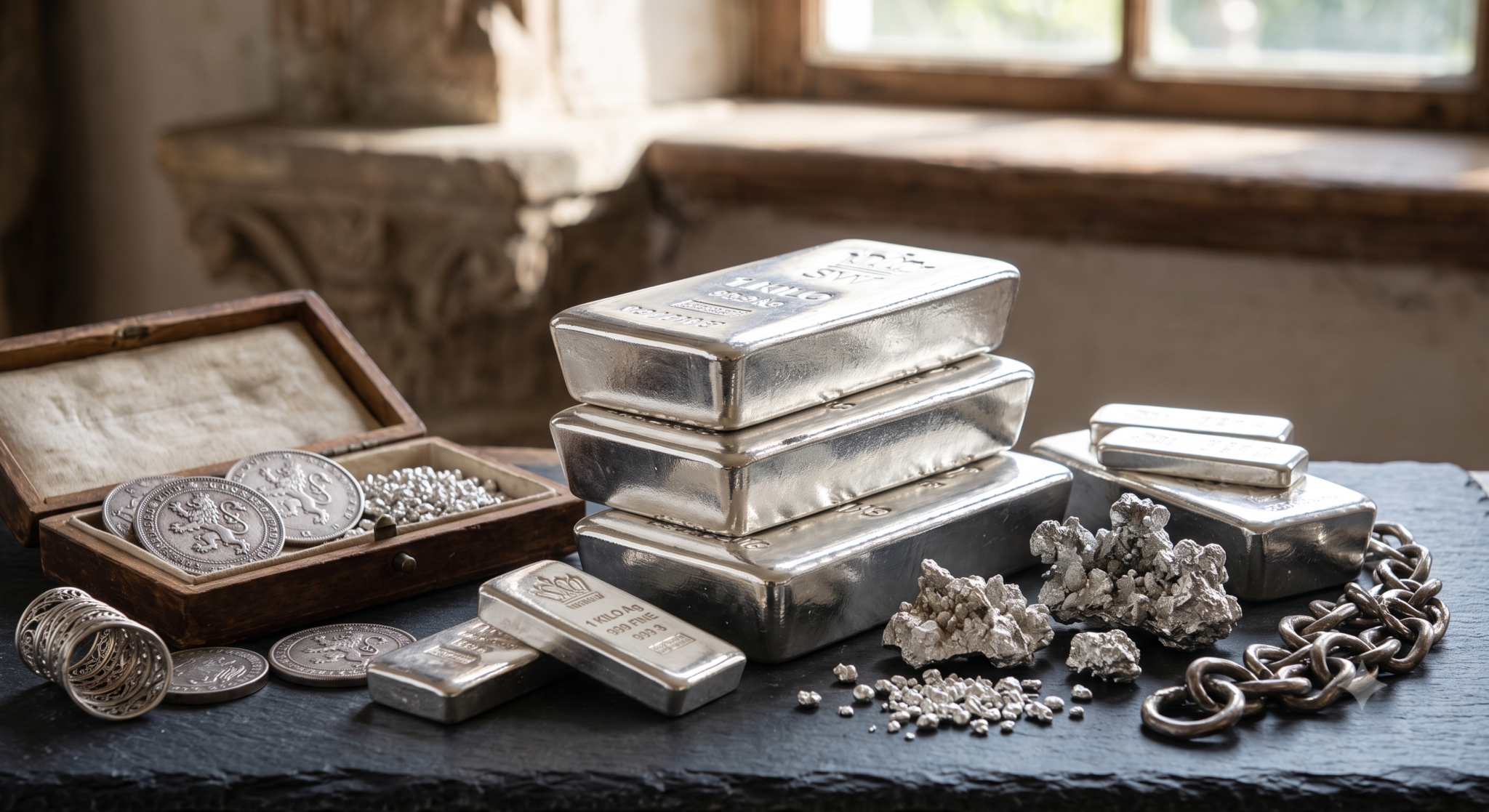
Assorted weight silver appears frequently in physical bullion markets where flexibility in purchasing size influences accessibility and accumulation strategies.
Smaller increments can carry different premiums compared to larger bars or bulk holdings, shaping how overall cost lines up with the prevailing market rate.
IRA certified silver is structured for inclusion in retirement-focused holdings, where purity standards and approved storage formats influence eligibility. This category reflects how regulatory frameworks intersect with bullion selection and long-term asset planning.
Colorized silver introduces a collectible dimension to physical silver, where artistic finishes and limited designs influence pricing beyond standard melt value. This demonstrates how visual enhancement and rarity can shift perceived worth in the marketplace.
Antique silver reflects aged or intentionally finished bullion pieces that emphasize texture, depth, and historical styling. These characteristics often create pricing structures that differ from standard bullion formats tied closely to spot valuation.
Silver Price and Spot Price Mechanics
The relationship between silver price and spot price begins with the structure of global commodity exchanges where silver trades in real time. Spot price reflects immediate supply and demand across futures markets, institutional trades, and currency movements.
Physical silver pricing builds on this basis but incorporates additional variables tied to production and distribution.
Market participants often observe that physical silver carries a premium above spot due to minting, refining, and logistical handling. These added components shift the final price presented to buyers of bullion products.
Spot price changes continuously throughout trading sessions, reacting to macroeconomic signals, interest rate expectations, and currency strength. Physical silver adjusts more gradually since inventory cycles and distribution channels introduce time delays.
The distinction between these two values creates a reference framework used by investors to evaluate market timing and acquisition strategy. While spot price reflects theoretical transaction value, physical pricing reflects tangible availability in real-world markets.
What Influences Spot Pricing in Precious Metals Markets
Spot pricing for silver responds to global trading volume, industrial demand, and macroeconomic conditions. Industrial use cases in electronics, energy systems, and manufacturing introduce demand fluctuations that can shift pricing momentum across short and long cycles.
Currency valuation plays a distinct part in silver pricing dynamics since the metal is commonly denominated in U.S. dollars. When currency strength shifts, relative purchasing power adjusts, influencing how spot values are interpreted across international markets.
Interest rate expectations also shape silver movement. Lower interest environments tend to increase interest in tangible assets, while higher rates can shift focus toward yield-bearing instruments. These cycles often appear in recurring patterns across broader economic timelines.
Supply conditions contribute to price behavior as mining output, refining capacity, and transportation logistics affect availability. Any constraint in these areas may influence short-term pricing volatility.
Voted "Best Overall Budgeting App" by Forbes and WSJ
Monarch Money helps you budget, track spending, set goals, and plan your financial future—all in one app.
Get 50% OFF your first year with code MONARCHVIP


Physical silver pricing often includes premiums that differ based on form, design, and market demand. These premiums are separate from spot value and reflect production costs, design complexity, and distribution channels.
Bullion bars and rounds typically present lower premiums compared to specialty or limited-run pieces. Production efficiency maters in determining final pricing structures for standard formats.
Collectible-focused silver often carries higher premiums due to design work, limited mintages, or unique finishing techniques. These introduce pricing layers that extend beyond metal content alone.
Storage, insurance, and distribution logistics also influence how premiums are calculated in retail environments. Each step in the physical supply chain contributes to the final cost structure seen by buyers.
Market conditions can compress or expand premiums depending on demand intensity. During high-interest periods, premiums may rise due to limited availability, while quieter markets can see tighter spreads between spot and retail pricing.
Investor Considerations When Evaluating Silver
Evaluation of silver holdings often begins with knowing the difference between melt value and acquisition cost. Melt value reflects underlying metal content based on spot pricing, while acquisition cost includes premiums tied to physical form.
Product selection can influence long-term flexibility. Standard bullion formats typically offer more liquidity, while specialized pieces may carry collectible appeal that affects resale behavior.
Storage considerations also play a part in physical silver ownership. Secure handling, protection from environmental exposure, and long-term preservation all contribute to maintaining value over time.
Market timing frequently influences purchasing decisions, although long-term accumulation strategies tend to prioritize consistency over short-term fluctuations. Price cycles in silver often reflect broader economic sentiment rather than isolated events.
Diversification across different forms of silver holdings may reflect a number of goals, from liquidity-focused assets to pieces valued for design or rarity. Each category interacts differently with spot price movements and retail pricing behavior.
Market Behavior and Long-Term Perspective
Silver markets often reflect a combination of industrial necessity and investment demand, creating price movements that respond to multiple forces at once. This dual nature contributes to both volatility and opportunity within the broader precious metals landscape.
Long term behavior of silver has historically shown cyclical movement tied to economic expansion and contraction phases. Industrial demand often strengthens during growth periods, while investment demand tends to increase during uncertainty.
Price differentials between spot and physical markets can widen during periods of heightened demand. This occurs when supply chains adjust more slowly than trading markets, leading to temporary imbalances.
Market participants often monitor both short-term fluctuations and long-term cycles when evaluating silver positioning. This dual focus helps contextualize price movements beyond immediate market noise.
Physical silver continues to reflect both monetary and industrial value, making its pricing structure more complex than single-factor assets.
The interaction between spot pricing and physical premiums remains a central element in how value is interpreted across different market segments.
Putting Silver Pricing into Real Market Perspective
Knowing the relationship between silver price and spot price offers a clearer view of how precious metals are valued in both trading environments and physical markets.
Spot pricing reflects real-time market activity, while physical pricing introduces additional layers tied to production, demand, and product variation.
Different forms of silver contribute unique characteristics that influence pricing behavior across categories. Market conditions, supply, and investor sentiment all interact to shape how value is established and maintained over time.
A structured perspective on these pricing layers supports more informed evaluation of silver across changing market cycles and physical formats.

Reviewed and edited by Albert Fang.
See a typo or want to suggest an edit/revision to the content? Use the contact us form to provide feedback.
At FangWallet, we value editorial integrity and open collaboration in curating quality content for readers to enjoy. Much appreciated for the assist.
Did you like our article and find it insightful? We encourage sharing the article link with family and friends to benefit as well - better yet, sharing on social media. Thank you for the support! 🍉
Article Title: Silver Price vs. Spot Price: What Every Precious Metals Investor Should Know
https://fangwallet.com/2026/06/30/silver-price-vs-spot-price-what-every-precious-metals-investor-should-know/The FangWallet Promise
FangWallet is an editorially independent resource - founded on breaking down challenging financial concepts for anyone to understand since 2014. While we adhere to editorial integrity, note that this post may contain references to products from our partners.
The FangWallet promise is always to have your best interest in mind and be transparent and honest about the financial picture.
Become an Insider

Subscribe to get a free daily budget planner printable to help get your money on track!
Make passive money the right way. No spam.
Editorial Disclaimer: The editorial content on this page is not provided by any of the companies mentioned. The opinions expressed here are the author's alone.
The content of this website is for informational purposes only and does not represent investment advice, or an offer or solicitation to buy or sell any security, investment, or product. Investors are encouraged to do their own due diligence, and, if necessary, consult professional advising before making any investment decisions. Investing involves a high degree of risk, and financial losses may occur including the potential loss of principal.
Source Citation References:
+ Inspo
There are no additional citations or references to note for this article at this time.