
This article may contain references to products or services from one or more of our advertisers or partners. We may receive compensation when you click on links to those products or services. Nonetheless, our opinions are our own.
The information presented in this article is accurate to the best of our knowledge at the time of publication. However, information is subject to change, and no guarantees are made about the continued accuracy or completeness of this content after its publication date.

Small business owners are right to be careful about where their money goes. Every dollar spent on marketing, operations, or equipment is a dollar that has to earn its way back. That discipline is healthy but can tip into a counterproductive frugality when it causes owners to underinvest in things that have an outsized return. Exterior holiday lighting is one of them.
The math is simple: In-store shopping is staging a genuine comeback.
The shift isn’t new: First Insight consumer surveys, tracked a massive 53% year-over-year spike in retail shopping intentions leading into recent seasons, consumers have steadily returned to physical retail, and they are doing it during the holiday season specifically.
The Frugal Purchase That Costs You More
Here is the mistake most budget-conscious owners make: they buy cheap consumer-grade lights from a big-box store to save money upfront, and end up spending more over time.
Consumer-grade string lights are manufactured for residential, occasional use — a few weeks on a front porch, then back into a box. They are not engineered for the operating conditions of a commercial exterior: six to eight hours of runtime every evening, rain, wind, temperature swings, and the expectation of consistent visual output every single night for six to eight weeks. They fade, fail, and need replacing far sooner than the price tag suggests.
Commercial-grade outdoor Christmas lights are built to different standards — heavier wire, weatherproofed connections, UV-stable materials, and individually replaceable bulbs. A quality commercial set purchased once and stored correctly should run reliably for five seasons or more. When you divide the cost across those seasons, the per-year number is substantially lower than replacing cheap consumer strings every one or two years. The frugal-looking option frequently costs more over any reasonable time horizon.
A $300 commercial set used for six seasons costs $50 a year. A $60 consumer set replaced every two seasons costs $30 a year — but looks noticeably worse, creates more maintenance headaches, and can fail partway through your most important trading period. The total cost of ownership favors buying right the first time.
Think of It as an Asset, Not an Expense
The mental reframe that changes the financial picture entirely: commercial lighting equipment is a depreciable business asset, not a one-time expense. Assets are things you buy once and extract value from over multiple years. Expenses are things you buy and consume immediately.
When you purchase a commercial-grade lighting set with a useful life of five or more seasons, you are buying an asset. Straight-line depreciation spreads that cost evenly across its useful life which means the annual accounting cost is a fraction of the purchase price.
Businesses that think about their lighting display this way stop replacing it every year and start treating it as infrastructure — something that gets maintained, stored properly, and redeployed reliably each season.
Voted "Best Overall Budgeting App" by Forbes and WSJ
Monarch Money helps you budget, track spending, set goals, and plan your financial future—all in one app.
Get 50% OFF your first year with code MONARCHVIP


What You’re Leaving on the Table by Going Dark
The opportunity cost of an undecorated exterior during the holiday season is real, even if it doesn’t appear on any financial statement.
According to Capital One Shopping’s retail research, in-store retail sales still account for roughly 80% of total U.S. retail sales — and in Q4 of 2025, consumers spent $2 trillion on retail goods, with the vast majority of that happening in physical stores. The holiday window concentrates that spending into a few critical weeks. A business that is physically unimpressive or invisible during those weeks captures less of a pool that doesn’t get any bigger by being ignored.
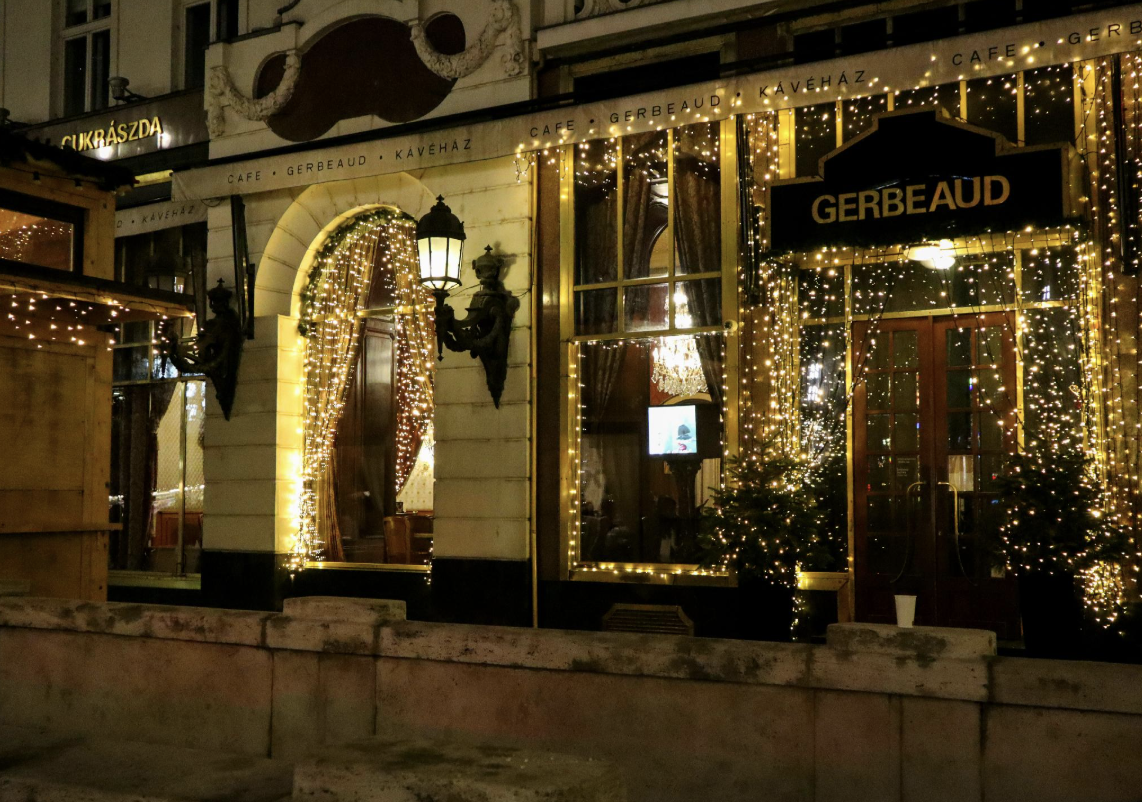
Exterior holiday lighting is one of the lowest-cost ways to increase your effective marketing presence during Q4 — it operates around the clock, requires no ongoing management once installed, and cannot be scrolled past the way a digital ad can.
The Comparison That Matters
When evaluating any marketing spend, the right question is not “is this cheap?” but “does this return more than it costs?” Measured against that standard, a well-executed exterior lighting display competes favorably against most alternatives available to a small business in Q4.
Consider what $500 to $1,500 buys in other channels. A modest Google Ads budget at those levels might generate a few weeks of modest traffic at typical small business conversion rates. A social media boost campaign at that spend produces impressions that expire the moment the budget runs out. Neither generates visibility 24 hours a day for six to eight continuous weeks, and neither doubles as a physical signal to every person who passes your building.
Meanwhile, research on small business marketing consistently shows that 73% of small businesses are not confident their current marketing strategy is working. The channel mix most businesses are relying on — social media, paid search, email — is increasingly expensive and increasingly competitive. A physical display is neither. It occupies real space that no other business can simultaneously occupy, and it creates a visual presence that compounds with every night it runs.
Making the Numbers Work
If you want to think about this in concrete terms, here is a framework that works for most businesses with a physical location.
Start with an honest assessment of what your highest-traffic weeks are worth. If your business generates $150,000 annually and the six weeks from mid-November to New Year’s Eve represent even 30% of that, those weeks are worth $45,000 in revenue. A modest increase in foot traffic and conversion during that window can add several thousand dollars to that number. That return dwarfs the cost of a quality commercial lighting setup, even in the first season.
Then factor in the repeat value. Unlike virtually every other marketing spend, the display is still yours next November. And the November after that. The first-season cost is the highest; every subsequent season costs only the time to install and take down.
Finally, consider storage. The entire financial argument for commercial-grade lighting depends on reusing it across multiple seasons, and that depends on storing it properly. Reels for strings, labelled bins for accessories, and a dry location are all it takes. That five-minute habit at the end of each season is worth real money — it is the difference between a recurring asset and a recurring expense.
The Bottom Line
Budget-conscious business owners are right to scrutinise every dollar. But scrutiny should lead to better decisions, not cheaper ones. When in-store shopping is growing, when the holiday window concentrates consumer spending into a handful of critical weeks, and when a quality exterior display operates as a persistent, low-maintenance marketing asset across multiple seasons, the case for doing it properly is straightforward.
Buying cheap and replacing it often is the expensive choice. Buying right once and protecting the investment is the financially smarter one. For any small business counting on Q4 to carry a meaningful share of the year, an undecorated exterior is a cost that just doesn’t show up on the invoice.

Reviewed and edited by Albert Fang.
See a typo or want to suggest an edit/revision to the content? Use the contact us form to provide feedback.
At FangWallet, we value editorial integrity and open collaboration in curating quality content for readers to enjoy. Much appreciated for the assist.
Did you like our article and find it insightful? We encourage sharing the article link with family and friends to benefit as well - better yet, sharing on social media. Thank you for the support! 🍉
Article Title: Why Budget-Savvy Business Owners Should Stop Skimping on Commercial Christmas Lights
https://fangwallet.com/2026/07/01/commercial-christmas-lights/The FangWallet Promise
FangWallet is an editorially independent resource - founded on breaking down challenging financial concepts for anyone to understand since 2014. While we adhere to editorial integrity, note that this post may contain references to products from our partners.
The FangWallet promise is always to have your best interest in mind and be transparent and honest about the financial picture.
Become an Insider
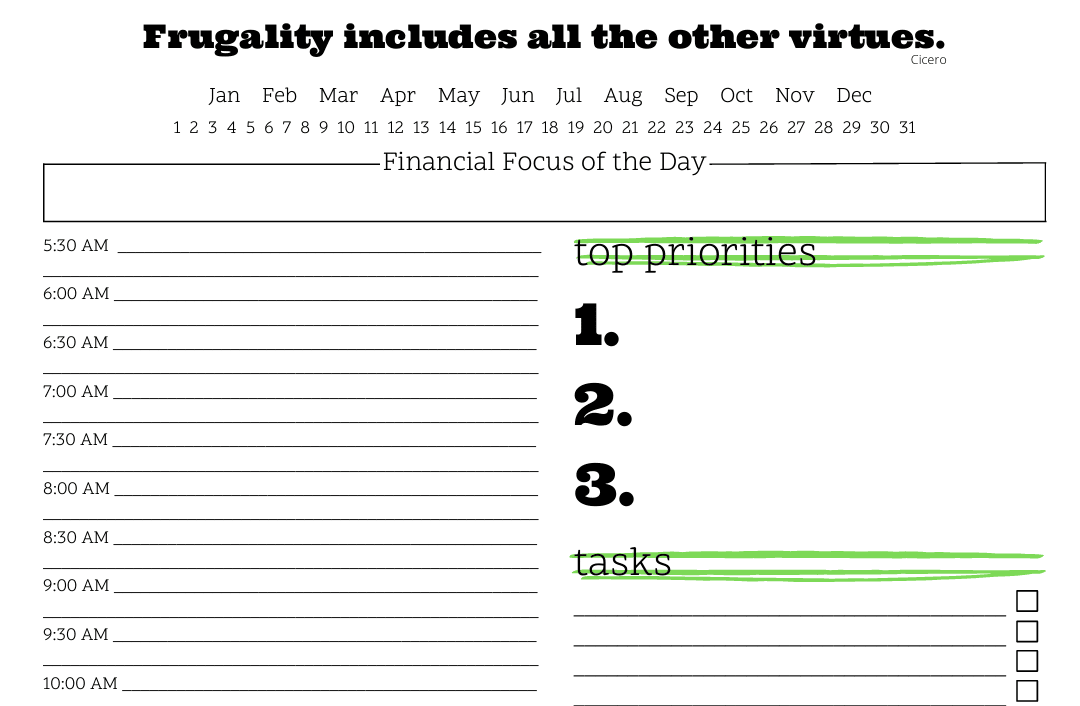
Subscribe to get a free daily budget planner printable to help get your money on track!
Make passive money the right way. No spam.
Editorial Disclaimer: The editorial content on this page is not provided by any of the companies mentioned. The opinions expressed here are the author's alone.
The content of this website is for informational purposes only and does not represent investment advice, or an offer or solicitation to buy or sell any security, investment, or product. Investors are encouraged to do their own due diligence, and, if necessary, consult professional advising before making any investment decisions. Investing involves a high degree of risk, and financial losses may occur including the potential loss of principal.
Source Citation References:
+ Inspo
There are no additional citations or references to note for this article at this time.