

This article may contain references to products or services from one or more of our advertisers or partners. We may receive compensation when you click on links to those products or services. Nonetheless, our opinions are our own.
The information presented in this article is accurate to the best of our knowledge at the time of publication. However, information is subject to change, and no guarantees are made about the continued accuracy or completeness of this content after its publication date.

When you open a banking app, transfer money, check your investment portfolio, or categorize your monthly expenses, you probably expect everything to work seamlessly. Every payment should go through instantly, your account balance should be accurate every time, and a budgeting app should pull in the right transactions for all periods.
Behind those seemingly simple experiences is a complex network of financial systems, APIs, databases, third-party services, and software applications. Managing all of this manually would be slow, expensive, and prone to errors. That is why fintech companies increasingly rely on automation. In this guide, we’ll cover what automation means in fintech and how it makes financial services more reliable for end consumers.
- What Is Automation in Fintech
- How Workflow Automation Improves Financial Operations
- Automation Doesn’t Mean No Supervision
- The Role of Automated Software Testing in Financial Companies
- Why API Testing Matters in Fintech
- Managing Tests at Scale
- Automation and CI/CD
- Automation Can Reduce Human Error but Not Eliminate It
- What Automation Means for Everyday Financial Consumers
- The Future of Automation in Financial Services
- Recommended Reads
What Is Automation in Fintech
In simple words, automation means using software to perform tasks that would otherwise require manual intervention. In financial services, those tasks can range from relatively simple processes, such as categorizing transactions, to highly complex operations involving multiple systems.
For example, consider what happens when you make an online payment. Several systems may need to communicate with one another to authenticate the transaction, verify available funds, process the payment, update account records, and notify you of the result.
Automation can coordinate many of these steps without requiring an employee to manually process each transaction.
The same concept applies to many other areas, such as fraud detection, Payment processing, Customer onboarding, loan applications, transaction categorization, account reconciliation, financial reporting, customer notifications, compliance checks, and data synchronization.
How Workflow Automation Improves Financial Operations
Financial organizations often have workflows involving several departments, applications, and databases. A loan application, for example, might require customer information to be collected, documents to be verified, credit information to be retrieved, eligibility to be calculated, and the customer to be notified of the decision.
Without automation, employees may need to move information between systems manually. Workflow automation can connect these steps into a structured process.
Once a particular event occurs, an AI-powered system can automatically trigger the next step. For instance, a submission of a completed application from a customer might trigger document verification, which could trigger a credit check, followed by an eligibility assessment and customer notification.
This reduces repetitive work while making processes more predictable. It also creates another important benefit: visibility. When workflows are automated, companies can monitor where a process is in its lifecycle, identify bottlenecks, and determine where failures are occurring. For a financial institution handling thousands or millions of transactions, that visibility can be extremely valuable.
Automation Doesn’t Mean No Supervision
There is an important distinction between automating a process and making that process reliable.
An automated workflow can still contain errors.
If an AI-powered financial reporting workflow calculates interest incorrectly, automating the calculation does not solve the underlying problem. It simply allows the incorrect calculation to happen faster and potentially at a much larger scale.
This is where software testing becomes critical. Before automation is deployed into a production environment, fintech companies need to verify that the underlying software behaves as expected.
The Role of Automated Software Testing in Financial Companies
Traditionally, software testers could manually execute test cases to determine whether an application worked correctly. While manual testing remains useful, particularly for exploratory testing and scenarios requiring human judgment, it has become increasingly difficult to rely on manual testing alone as financial applications become larger and more interconnected.
Automated software testing allows companies to execute repeatable tests using software. For example, a fintech company might have hundreds of test cases covering account creation, payments, authentication, transaction processing, and reporting. Instead of manually running every test whenever developers make a change, automated testing can execute many of those scenarios automatically.
This is especially useful for regression testing. Suppose a development team changes the payment functionality of an application. The change may appear unrelated to account balances, transaction history, or notifications. Regression tests can automatically check those existing features to make sure the new code hasn’t unintentionally affected them. This gives development teams greater confidence when making changes to complex financial systems.
Voted "Best Overall Budgeting App" by Forbes and WSJ
Monarch Money helps you budget, track spending, set goals, and plan your financial future—all in one app.
Get 50% OFF your first year with code MONARCHVIP


Why API Testing Matters in Fintech
Modern financial applications rarely operate in isolation. They communicate with other applications and services through APIs, or application programming interfaces.
A budgeting application might use APIs to retrieve financial information. A payment platform might communicate with banks or payment processors. A lending application may connect to external services to retrieve information needed during an application.
These connections introduce another potential point of failure.
An application might function correctly internally but still fail because an external API returns unexpected data, becomes unavailable, or changes its response format.
For fintech companies, reliable APIs are particularly important because a small integration problem can have a noticeable impact on customers.
Managing Tests at Scale
As the number of automated tests grows, simply having tests isn’t enough.
Teams also need a way to organize, maintain, execute, and monitor those tests.
This is where test management becomes important.
Test management involves organizing test cases, tracking their execution, documenting results, and connecting testing activities with the broader software development process.
For a large fintech platform with thousands of test scenarios, multiple environments, frequent releases, and several development teams, managing that information becomes considerably more complicated.
A centralized test management process can give teams better visibility into questions such as:
- Which features have been tested?
- Which tests failed?
- Which tests need to be rerun?
- What changed between releases?
- Which requirements are covered by testing?
- Are critical financial workflows being tested?
- Where are the biggest areas of risk?
That visibility becomes particularly useful when automation is involved because teams can connect automated test results with the test cases and requirements they are designed to validate.
Automation and CI/CD
Modern fintech companies also need to release software quickly.
Financial applications are constantly evolving. Teams may need to introduce new features, fix bugs, improve security, or respond to changes in third-party services. Continuous integration and continuous delivery (CI/CD) help development teams automate parts of the software delivery process.
A simplified workflow might look like this:
Code change → Build → Automated tests → Security checks → Staging → Deployment
When a developer commits a change, automated systems can build the application and run a series of tests before the change reaches customers. If a critical test fails, the deployment process can be stopped until the problem is investigated.
This creates an important feedback loop.
Instead of discovering a problem after a new feature has been released, teams can potentially identify it earlier in the development process. For financial services, where software errors can have significant consequences, catching problems early can be extremely valuable.
Automation Can Reduce Human Error but Not Eliminate It
One of the biggest advantages of workflow automation through AI orchestration is reducing repetitive manual work. But automation itself needs to be designed, tested, and monitored carefully.
Poorly designed automation can introduce new problems.
For example, an automated workflow might process incorrect data, trigger an action at the wrong time, or fail silently when an external service becomes unavailable. This is why reliable fintech organizations typically combine automation with multiple layers of quality assurance.
Those layers might include unit testing, integration testing, API testing, regression testing, security testing, performance testing, manual exploratory testing, automated end-to-end testing, and production monitoring. Each layer addresses different types of risk.
The goal isn’t to eliminate every possible failure. That’s unrealistic. The goal is to identify important risks early, reduce preventable errors, and make systems resilient when unexpected situations occur.
What Automation Means for Everyday Financial Consumers
Most people will never see the automation happening behind their financial applications. They simply experience the outcome, such as a payment arriving quickly, a budgeting application automatically categorizing a transaction, or a bank sending a notification when money leaves an account. These experiences depend on systems working together reliably.
As consumers, we often judge financial technology by its interface. If an application looks simple and responds quickly, it can feel like the technology behind it must also be simple. The opposite is often true. A simple user experience can depend on hundreds of automated processes operating behind the scenes.
The Future of Automation in Financial Services
Automation will likely become even more deeply integrated into financial services as companies adopt artificial intelligence, cloud infrastructure, APIs, and increasingly sophisticated software platforms.
The next generation of financial automation won’t simply be about performing repetitive tasks faster. It will increasingly involve systems that can identify patterns, make recommendations, detect anomalies, and adapt workflows in response to changing circumstances.
But greater automation also creates a greater need for quality control. The more processes that depend on software, the more important it becomes to know that the software is behaving correctly.
For fintech companies, reliability therefore isn’t created by automation alone. It’s created by combining automation with testing, monitoring, security, and effective quality management.

Reviewed and edited by Albert Fang.
See a typo or want to suggest an edit/revision to the content? Use the contact us form to provide feedback.
At FangWallet, we value editorial integrity and open collaboration in curating quality content for readers to enjoy. Much appreciated for the assist.
Did you like our article and find it insightful? We encourage sharing the article link with family and friends to benefit as well - better yet, sharing on social media. Thank you for the support! 🍉
Article Title: How Fintech Firms Use Automation for Reliable Financial Services
https://fangwallet.com/2026/08/12/how-fintech-firms-use-automation-for-reliable-financial-services/The FangWallet Promise
FangWallet is an editorially independent resource - founded on breaking down challenging financial concepts for anyone to understand since 2014. While we adhere to editorial integrity, note that this post may contain references to products from our partners.
The FangWallet promise is always to have your best interest in mind and be transparent and honest about the financial picture.
Become an Insider
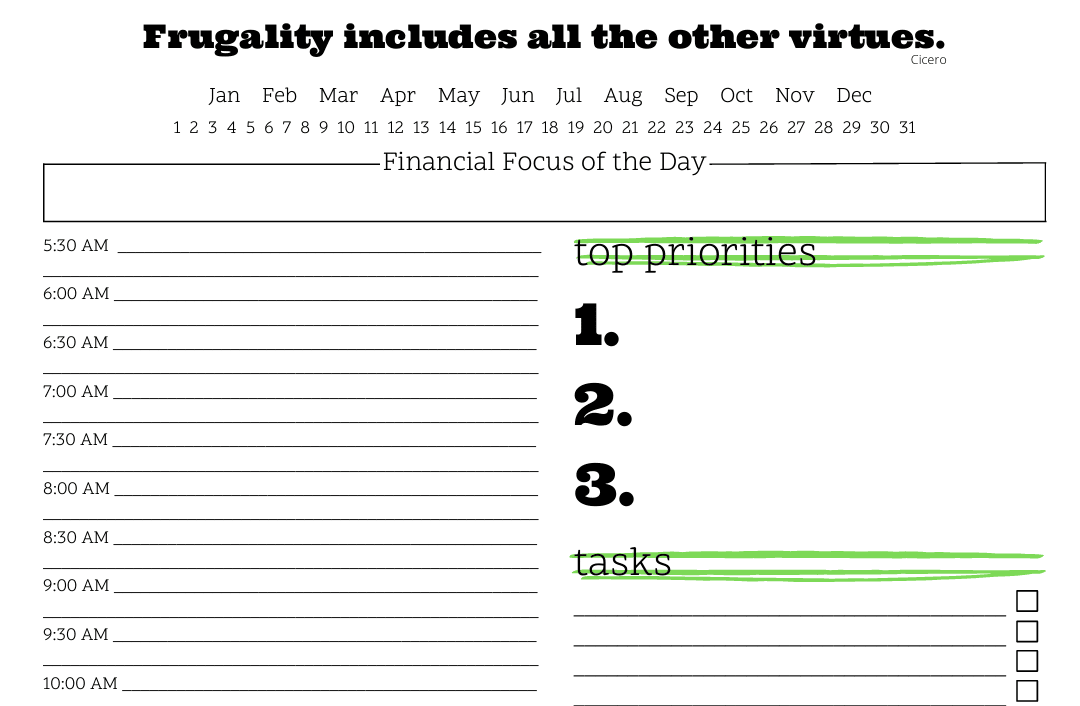
Subscribe to get a free daily budget planner printable to help get your money on track!
Make passive money the right way. No spam.
Editorial Disclaimer: The editorial content on this page is not provided by any of the companies mentioned. The opinions expressed here are the author's alone.
The content of this website is for informational purposes only and does not represent investment advice, or an offer or solicitation to buy or sell any security, investment, or product. Investors are encouraged to do their own due diligence, and, if necessary, consult professional advising before making any investment decisions. Investing involves a high degree of risk, and financial losses may occur including the potential loss of principal.
Source Citation References:
+ Inspo
There are no additional citations or references to note for this article at this time.