
This article may contain references to products or services from one or more of our advertisers or partners. We may receive compensation when you click on links to those products or services. Nonetheless, our opinions are our own.
The information presented in this article is accurate to the best of our knowledge at the time of publication. However, information is subject to change, and no guarantees are made about the continued accuracy or completeness of this content after its publication date.

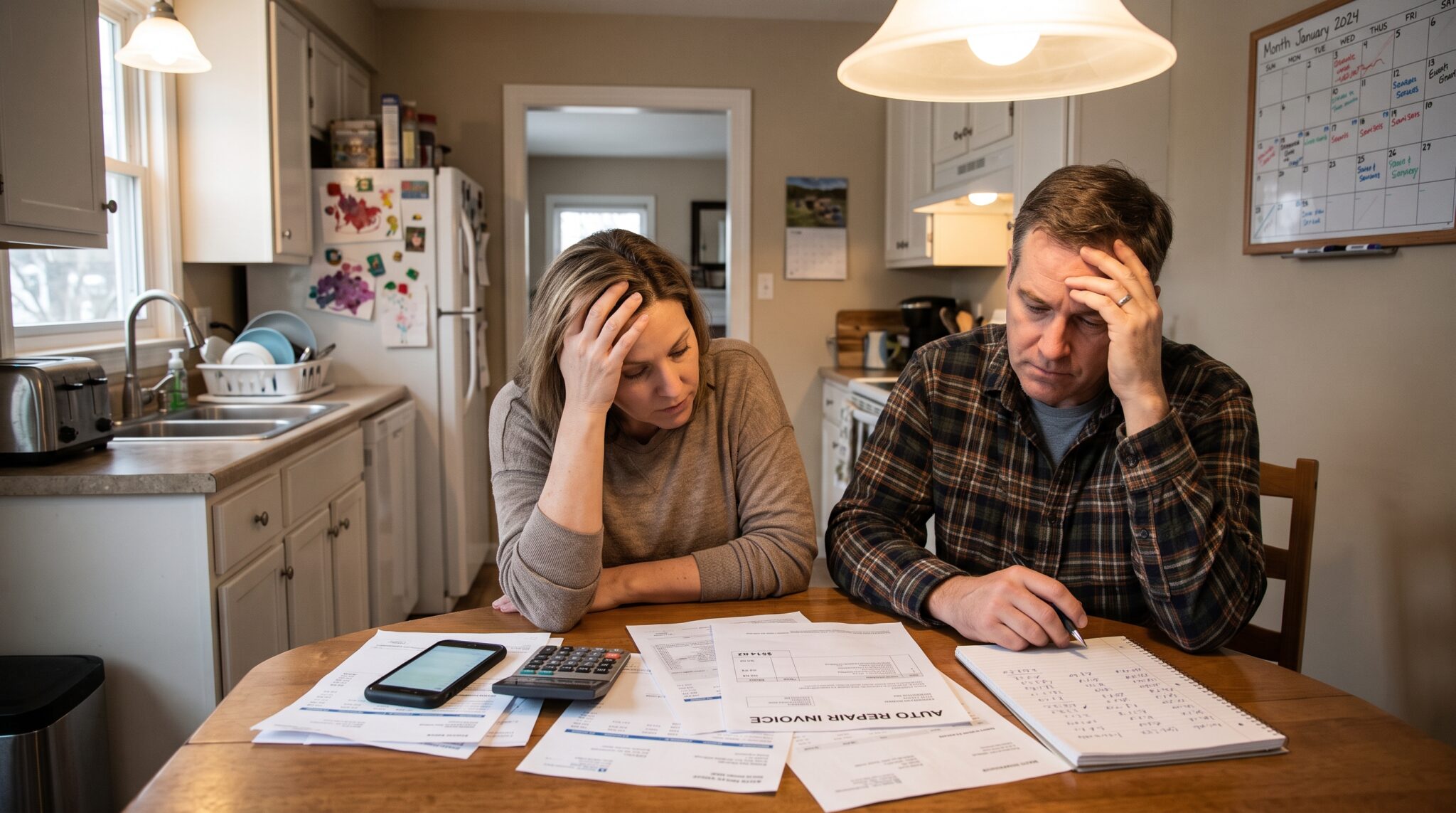
An unexpected $500 expense may seem manageable, but for a household living paycheck to paycheck, it can create a chain reaction of financial challenges. A sudden car repair, medical bill, broken appliance, or urgent home repair can force families to adjust their spending, delay payments, or seek additional financial assistance. Understanding why these emergencies have such a significant impact can help households prepare and make informed decisions when unexpected costs arise.
How a Small Emergency Creates a Big Financial Problem
Most household budgets are built around predictable expenses, including rent or mortgage payments, groceries, utilities, transportation, insurance, and childcare. When income is already allocated to these essentials, an unexpected bill can leave little room for adjustments.
For example, a family with $100 remaining after paying monthly expenses may need to find another $400 to cover a $500 emergency. That shortfall could mean postponing a utility payment, reducing grocery spending, or relying on a credit card. If another bill arrives before the next paycheck, the financial pressure can grow quickly.
The Federal Reserve’s Report on the Economic Well-Being of U.S. Households highlights this challenge. In its 2024 survey, 63% of adults said they could cover an unexpected $400 expense using cash or its equivalent, including savings or a credit card paid off at the next statement. This means a substantial share of adults would need to consider other ways to handle a similar financial shock.
Common Expenses That Can Disrupt a Budget
Unexpected costs often arise when people have the least flexibility to manage them. A vehicle breakdown can affect someone’s ability to commute to work, while an urgent medical expense may require immediate payment. A refrigerator or washing machine failure can also create additional costs if replacement or repair cannot wait.
These expenses are difficult because they are rarely included in routine monthly budgets. Even households with stable employment can struggle when an emergency occurs shortly before payday or when several bills are due at once.
The consequences can extend beyond the original expense. A delayed utility payment may result in a late fee, while putting an emergency purchase on a credit card can increase the balance and future interest charges. Without a plan, one unexpected bill can affect several months of household finances.
Voted "Best Overall Budgeting App" by Forbes and WSJ
Monarch Money helps you budget, track spending, set goals, and plan your financial future—all in one app.
Get 50% OFF your first year with code MONARCHVIP


Practical Ways to Handle a $500 Shortfall
The first step is to assess the situation rather than immediately choosing the fastest available financial option. Review the household budget, identify upcoming bills, and determine how much money is genuinely missing. This helps separate essential expenses from purchases that can wait.
Consider these practical strategies:
- Contact service providers: Ask medical offices, utility companies, or repair businesses whether they offer payment plans or extensions.
- Review available savings: Even a small emergency fund can reduce the amount that must be borrowed.
- Explore workplace assistance: Some employers offer paycheck advances or emergency support programs.
- Ask about community resources: Local nonprofit organizations may provide assistance with food, utilities, transportation, or other essential expenses.
- Compare borrowing options carefully: If borrowing is necessary, review the total repayment amount, fees, interest rate, and due date before agreeing to any terms.
The Consumer Financial Protection Bureau recommends considering the cost of a loan, the repayment plan, and alternatives before taking out a payday loan. Its guidance on payday loans explains why short-term borrowing can become difficult when repayment competes with ordinary household bills.
Understanding Short-Term Borrowing Options
Sometimes, savings and payment extensions are not enough to cover an urgent expense. In these situations, comparing available financial options can help borrowers understand their choices. Depending on eligibility, alternatives may include a credit union loan, a personal loan, or assistance from family and friends.
For people exploring options for borrowing $500 quickly, it is important to review the lender’s terms before submitting an application. Check the amount due at repayment, any additional charges, the payment schedule, and the consequences of paying late. Approval and funding timelines vary, and no borrowing option should be assumed to be guaranteed.
A useful rule is to consider whether the repayment will leave enough money for rent, food, transportation, and utilities. Receiving money quickly may address today’s emergency, but an unaffordable repayment could create another shortfall in the following weeks.
Building Protection Against Future Emergencies
Once the immediate problem is resolved, creating a small emergency fund can help prevent similar situations from becoming financial crises. Start with a realistic goal, such as saving $10 or $20 from each paycheck. Although progress may be gradual, consistent contributions can build a useful financial cushion over time.
It can also help to review recurring expenses, cancel unused subscriptions, plan for predictable maintenance, and set aside money for annual bills. Keeping emergency savings separate from everyday spending may make it easier to preserve the funds for genuine needs.
Conclusion
A $500 emergency can disrupt an entire household budget because essential expenses leave many families with limited financial flexibility. Unexpected bills may lead to delayed payments, additional debt, and prolonged financial stress. By reviewing available resources, comparing borrowing costs, and gradually building emergency savings, households can respond more confidently to unexpected expenses and strengthen their financial stability over time.

Reviewed and edited by Albert Fang.
See a typo or want to suggest an edit/revision to the content? Use the contact us form to provide feedback.
At FangWallet, we value editorial integrity and open collaboration in curating quality content for readers to enjoy. Much appreciated for the assist.
Did you like our article and find it insightful? We encourage sharing the article link with family and friends to benefit as well - better yet, sharing on social media. Thank you for the support! 🍉
Article Title: Why a 0 Emergency Can Disrupt an Entire Household Budget
https://fangwallet.com/2026/10/15/why-a-500-emergency-can-disrupt-an-entire-household-budget/The FangWallet Promise
FangWallet is an editorially independent resource - founded on breaking down challenging financial concepts for anyone to understand since 2014. While we adhere to editorial integrity, note that this post may contain references to products from our partners.
The FangWallet promise is always to have your best interest in mind and be transparent and honest about the financial picture.
Become an Insider
Subscribe to get a free daily budget planner printable to help get your money on track!
Make passive money the right way. No spam.
Editorial Disclaimer: The editorial content on this page is not provided by any of the companies mentioned. The opinions expressed here are the author's alone.
The content of this website is for informational purposes only and does not represent investment advice, or an offer or solicitation to buy or sell any security, investment, or product. Investors are encouraged to do their own due diligence, and, if necessary, consult professional advising before making any investment decisions. Investing involves a high degree of risk, and financial losses may occur including the potential loss of principal.
Source Citation References:
+ Inspo
There are no additional citations or references to note for this article at this time.