

This article may contain references to products or services from one or more of our advertisers or partners. We may receive compensation when you click on links to those products or services. Nonetheless, our opinions are our own.
The information presented in this article is accurate to the best of our knowledge at the time of publication. However, information is subject to change, and no guarantees are made about the continued accuracy or completeness of this content after its publication date.

Commercial property insurance is one of the many types of business insurance. This coverage is essential, though it only applies to specific scenarios.
Learn everything you must know about commercial property insurance for small businesses and the top-rated options on the market.
- It Protects More Than the Building
- It Is Optional
- It Does Not Cover Fleet Vehicles
- It Excludes Earthquakes and Floods
- It May Include Terrorism Coverage
- It Pairs Well With Other Business Insurance
- 3 Top-Rated Commercial Property Insurance for Small Businesses
It Protects More Than the Building
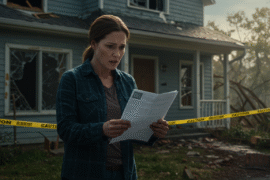
A standard policy protects assets against loss or damage from various causes, extending well beyond the building itself. When natural disasters, vandalism, fire, smoke, vehicle or aircraft collisions, or civil disturbances like riots damage your property, commercial property insurance pays for the repair or restoration of the structure.
Coverage also includes stolen or damaged items inside and around the building, from outdoor fixtures and furniture to computers, tools and inventory.
It Is Optional
Regulators in many jurisdictions rarely mandate this coverage by law, but the practical reality often differs. Mortgage lenders typically require it when financing property purchases, and landlords usually demand proof of coverage before leasing commercial space to tenants.
Rates reflect multiple factors, including business size, risk profile, business model, building type and industry-specific hazards. High-risk sectors and businesses in flood-prone areas face steeper premiums than those operating in lower-risk environments.
It Does Not Cover Fleet Vehicles
Commercial property coverage excludes company vehicles because the policy structure focuses exclusively on stationary assets. If your business owns or leases cars for work tasks, deliveries or client meetings, you will need separate commercial auto coverage, as personal auto policies typically exclude business use.
Commercial auto insurance addresses liability from at-fault accidents, collision-related and noncollision damage, medical bills and vehicle repairs when the other party is uninsured or underinsured. This reduces counterparty risk.
It Excludes Earthquakes and Floods
Standard commercial property insurance policies exclude earthquakes and floods because it is difficult to predict their timing and potential damage. Incorporating them into policies causes commercial insurers to struggle to set baseline pricing while maintaining sufficient liquidity to pay future claims.
Rather than building these coverages into every policy, commercial insurers offer specialized endorsements or separate policies for businesses in earthquake- and flood-prone areas. They do this when the risk justifies dedicated protection.
Voted "Best Overall Budgeting App" by Forbes and WSJ
Monarch Money helps you budget, track spending, set goals, and plan your financial future—all in one app.
Get 50% OFF your first year with code MONARCHVIP


It May Include Terrorism Coverage
Standard commercial property insurance plans exclude terrorism coverage for the same reasons they exclude earthquakes and floods. The unpredictable nature of these events makes them difficult to price into standard policy structures without dramatically increasing premiums for all policyholders.
You can often add terrorism protection as a rider or endorsement. Alternatively, you can purchase it as a separate policy. Keep in mind that classification matters, as cyber liability insurance covers digital attacks, not terrorism insurance, even when cyberattacks are politically motivated. Providers typically pay claims only for events officially recognized by the government as terrorist acts, so payouts depend on how authorities define the incident.
It Pairs Well With Other Business Insurance
Bundling commercial property insurance with other coverage types reduces premiums and ensures adequate protection without driving up annual operating expenses. Many small-business owners combine commercial property, general liability and business interruption insurance into one policy that addresses multiple risk factors. Having one contract simplifies policy management.
Working with a single commercial insurer streamlines administration. However, shopping around for separate policies may yield greater savings if competitors offer lower base rates for specific coverages.
3 Top-Rated Commercial Property Insurance for Small Businesses
Comparing commercial property insurance policies for small businesses is easier when you narrow your options to the best companies. Start your search with these three.
1. The Shepherd Group
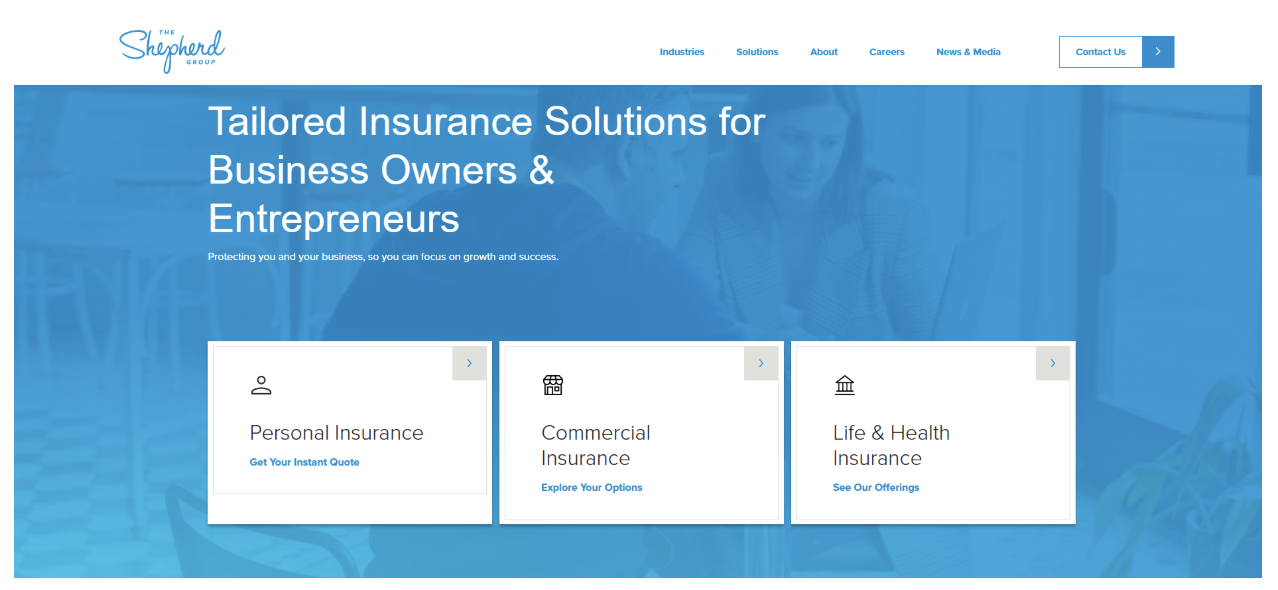
The Shepherd Group is a leading insurance brokerage based in Vaughan, Ontario. The organization offers a comprehensive selection of commercial insurance products, enabling complete risk management while emphasizing responsiveness, simplicity, transparency, affordability and flexibility.
Brokers at The Shepherd Group help small-business owners understand everything they should know about commercial property insurance. Expert guidance is key to comparing coverage options and getting specialized protection for unique business risks with speed, accuracy and no last-minute surprises.
Key Features
- Niche industry specialization: This brokerage firm has deep expertise in highly specialized or high-risk sectors with unique hazards that standard commercial property insurance policies may not adequately cover.
- One-stop-shop model: The Shepherd Group offers holistic insurance policies to protect small businesses from various risks, combining commercial property damage, business interruption, and general, product and cyber liability. It merges commercial, personal, and life and health coverages.
- Canadian focus: The Shepherd Group serves businesses across Canada with an understanding of the local business environment, including provincial regulations, climate risks and industry-specific requirements.
2. Travelers

Travelers serves small businesses planning to expand internationally or operating across multiple countries. Its global reach spans over 150 countries with expertise in regional laws and local customs.
The company delivers worldwide property coverage through the International Network of Insurance. It uses strategic alliances to adapt quickly to regulatory changes, particularly as climate-driven weather events become more frequent and intense.
Key Features
- OMNI℠ program: This policy features an array of specialized optional coverages and limits to tailor protection. It encompasses the majority of property insurance needs for small- to midsize businesses.
- Customized property coverage: Travelers sources traditionally structured coverage and alternative solutions to address complex coverage needs that standard policies may not accommodate.
- Subrogation service: This program allows Travelers to help you pursue reimbursement for damage when the loss falls below your property insurance policy’s deductible.
3. Liberty Mutual
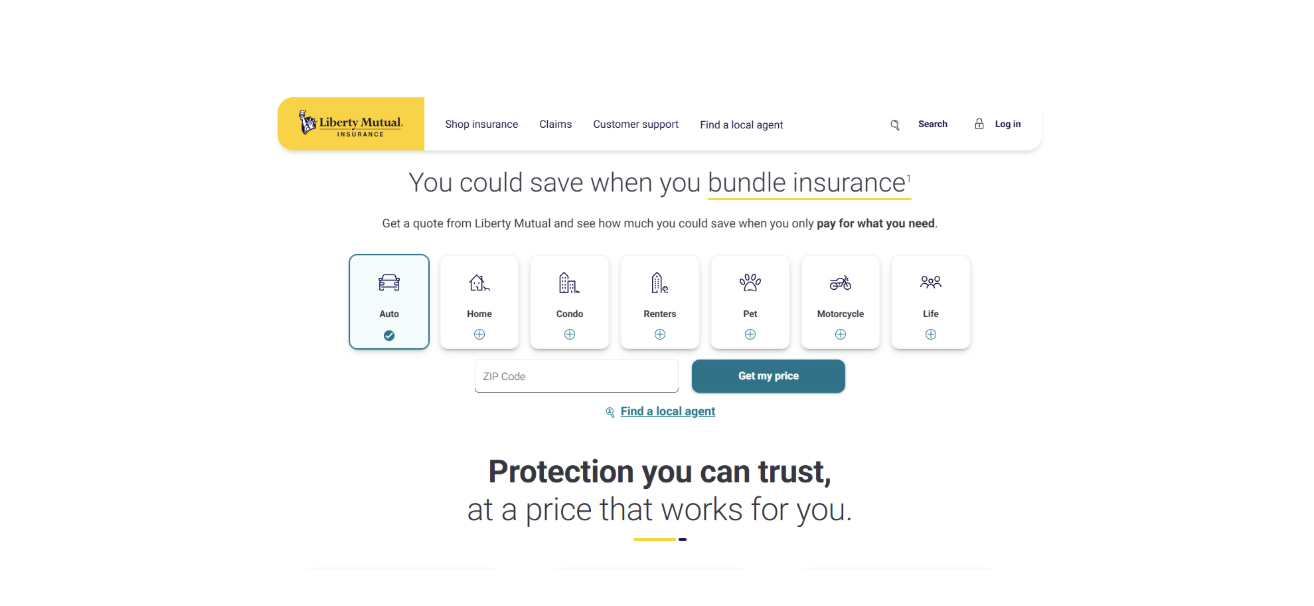
Liberty Mutual offers flexibility that appeals to small businesses in the United States. You can buy commercial property insurance as stand-alone coverage, bundle it with general liability, and add cyber and professional liability protection based on your specific risk profile and budget.
This modular approach ensures you only pay for what you need while maintaining the option to expand coverage as operations grow.
Key Features
- Fortune 100 company: Liberty Mutual is a large commercial insurer with billions of dollars under management. Its financial strengths demonstrate the company’s ability to pay considerable claim sizes, inspiring confidence among small-business owners.
- Independent agent network: Its independent agents are knowledgeable. They can customize packages and deliver personalized services that help small-business owners navigate complex policy options.
- 24/7 account management: This commercial insurer provides an online platform that enables you to access policies, pay bills, file claims and track policy activity anytime.
Leading Commercial Property Insurance Options at a Glance
Learn how long these companies have been helping small businesses buy adequate commercial property insurance and the industries they specialize in.
| Company | Year Founded | Industries Served |
| The Shepherd Group | 2008 | Cannabis, hospitality, contractors and trades, landscaping and snow removal, and roofing |
| Travelers | 1864 | Agriculture, automotive, energy, food service, healthcare, manufacturing and transportation |
| Liberty Mutual | 1912 | Finance, food and beverage, life sciences, real estate, retail and technology |
Frequently Asked Questions
Here are the answers to the common questions about commercial property insurance.
Q: Does commercial property insurance cover lost income if your business is forced to close?
A: Commercial property insurance usually does not cover lost income if companies must close. This coverage pays for repairs to the damaged physical structure and the replacement of affected items inside and around the building.
To get compensated for lost earnings during the temporary closure, you need business interruption insurance. You can bundle coverage with standard commercial property insurance or buy a separate policy.
Q: What is the difference between actual cash value and replacement cost?
A: The difference between actual cash value and replacement cost policies is depreciation. Actual cash value coverage does not recover depreciation. It only considers the value of the property and its contents at the time of loss, so the payout is generally less than the amount needed to restore the building and replace the affected items.
On the other hand, replacement cost coverage reimburses depreciation, so the payout is closer to the total loss after the deductible.
Q: What is a coinsurance penalty in commercial property insurance?
A: A coinsurance penalty in commercial property insurance is a reduction in the claim payout. Commercial property insurance policies include a coinsurance clause, which requires the coverage limit to match a certain percentage of the insured assets’ actual value. This requirement exists to discourage underinsurance, as many small-business owners may opt for less coverage to pay for lower premiums and expect to get fully reimbursed for losses.
Scheduling regular appraisals to understand the value of the covered assets better can help you determine whether the commercial property insurance’s existing coverage limit is sufficient and avoid the coinsurance penalty.
Select Suitable Commercial Property Insurance for Small Businesses
Understanding what commercial property insurance covers and excludes helps you eliminate insurance gaps while balancing cost and financial protection. Work with sources that offer expert advice, specialize in your industry and provide comprehensive policies at competitive prices to manage risk without inflating operating expenses.

Reviewed and edited by Albert Fang.
See a typo or want to suggest an edit/revision to the content? Use the contact us form to provide feedback.
At FangWallet, we value editorial integrity and open collaboration in curating quality content for readers to enjoy. Much appreciated for the assist.
Did you like our article and find it insightful? We encourage sharing the article link with family and friends to benefit as well - better yet, sharing on social media. Thank you for the support! 🍉
Article Title: What Should Small-Business Owners Know About Commercial Property Insurance?
https://fangwallet.com/2026/10/08/what-should-small-business-owners-know-about-commercial-property-insurance/The FangWallet Promise
FangWallet is an editorially independent resource - founded on breaking down challenging financial concepts for anyone to understand since 2014. While we adhere to editorial integrity, note that this post may contain references to products from our partners.
The FangWallet promise is always to have your best interest in mind and be transparent and honest about the financial picture.
Become an Insider
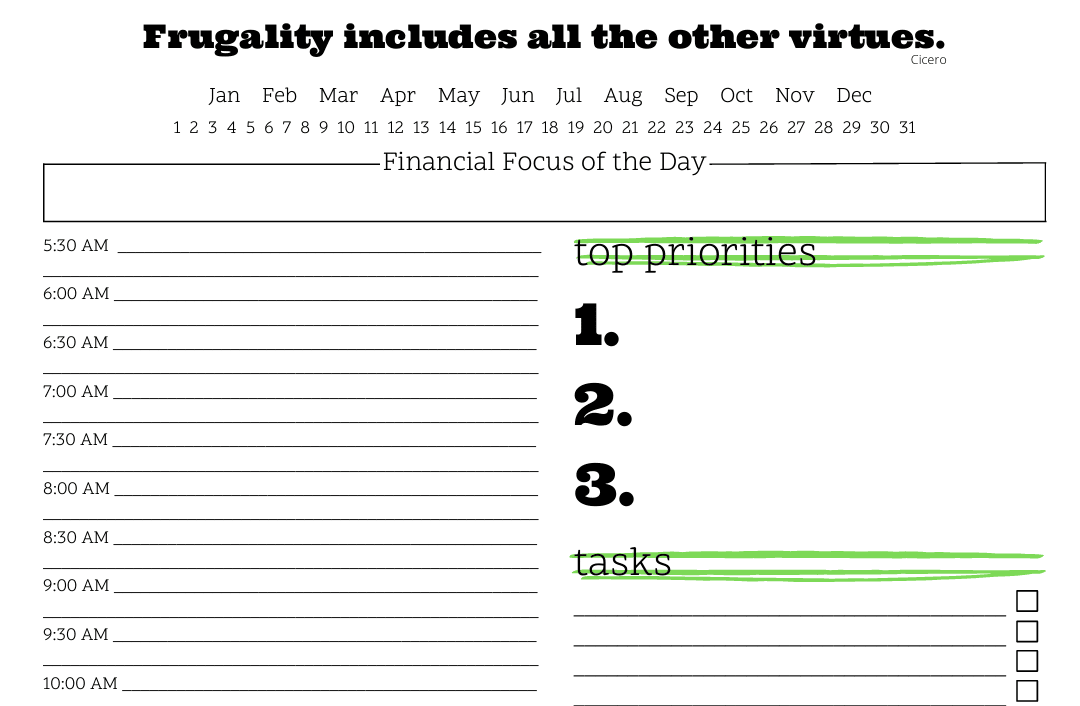
Subscribe to get a free daily budget planner printable to help get your money on track!
Make passive money the right way. No spam.
Editorial Disclaimer: The editorial content on this page is not provided by any of the companies mentioned. The opinions expressed here are the author's alone.
The content of this website is for informational purposes only and does not represent investment advice, or an offer or solicitation to buy or sell any security, investment, or product. Investors are encouraged to do their own due diligence, and, if necessary, consult professional advising before making any investment decisions. Investing involves a high degree of risk, and financial losses may occur including the potential loss of principal.
Source Citation References:
+ Inspo
There are no additional citations or references to note for this article at this time.