
This article may contain references to products or services from one or more of our advertisers or partners. We may receive compensation when you click on links to those products or services. Nonetheless, our opinions are our own.
The information presented in this article is accurate to the best of our knowledge at the time of publication. However, information is subject to change, and no guarantees are made about the continued accuracy or completeness of this content after its publication date.

Business assets can look simple on paper. A truck moves stock. A printer handles orders. A warehouse stores inventory. A laptop helps the team work faster. Easy, right?
Not always.
The real question is not just what the asset is. It’s what the business needs it to do, how often it will be used, and whether it will still be useful in a few years. A small business buying equipment for daily operations may think differently from a growing company testing a new service line.
That’s where the lease, buy, or finance decision starts. Not with the monthly payment. With the purpose.
If an asset is central to how the business makes money, ownership may carry more weight. If it’s temporary, seasonal, or likely to become outdated, leasing could make more sense. If it’s essential but too expensive to buy outright, financing may sit in the middle.
- When Leasing Makes Sense
- When Buying Is the Better Option
- Where Financing Fits In
- Look at Risk Before Signing Anything
- Think About Property and Space Needs
- Match the Asset Type to the Funding Choice
- Compare the True Cost, Not Just the Price
- Choose the Option That Protects Cash Flow
- Recommended Reads
When Leasing Makes Sense
Leasing can be useful when flexibility matters more than ownership. It lets a business access equipment, vehicles, technology, or premises without tying up a large amount of cash from day one.
This can be a smart move for assets that age quickly. Think computers, software systems, or specialized machinery that may need upgrades every few years. Nobody wants to be stuck owning equipment that becomes outdated before the final invoice is even filed away. That’s just expensive clutter with a power cord.
Leasing may also help with cash flow. Instead of spending a large lump sum, the business spreads the cost over regular payments. That can make budgeting easier, especially for younger businesses that need working capital for payroll, stock, marketing, and other daily costs.
Still, leasing is not “cheap” by default. Over time, lease payments can add up. Some agreements include restrictions, fees, maintenance rules, or end-of-term conditions that need a close look. A lower monthly payment may hide a higher total cost.
When Buying Is the Better Option
Buying can work well when the asset has a long useful life and the business expects to use it heavily. Ownership gives control. There are no lease limits, no return conditions, and no ongoing obligation once the asset is paid for.
A business that relies on the same equipment every day may prefer to buy because the asset becomes part of its operating base. There’s value in that stability. It can also be easier to customize, modify, or resell an owned asset, depending on what it is.
The downside is obvious. Buying takes cash. Sometimes a lot of it.
Using too much cash on one asset can leave the business short in other areas. A shiny new machine will not help much if there’s not enough money left to hire staff, purchase materials, or handle a slow month. This is where business owners need to be honest, not optimistic. Cash flow has a way of humbling even the best plans.
Before buying, it helps to ask how quickly the asset will pay for itself. Will it increase revenue? Reduce costs? Improve productivity? Or is it just nice to have?
Where Financing Fits In
Financing can be a practical middle ground when the business wants ownership but does not want to drain cash reserves. Instead of paying upfront, the business uses structured repayments over time.
A company loan may be suitable when the asset supports growth, such as new equipment, vehicles, fit-outs, or technology that helps the business earn more or operate better. The key is making sure the repayments fit comfortably within the business’s income, not just during good months, but during slower ones too.
Financing can also preserve cash for other priorities. That matters. Cash is not just money sitting around. It’s a breathing room. It helps businesses respond to delayed invoices, sudden repairs, supplier changes, and all the little surprises that never appear in a neat spreadsheet.
The trade-off is cost. Interest, fees, and loan terms all affect the real price of the asset. A financed asset may cost more in total than buying outright. That does not make it a bad choice. It just means the business needs to compare the full cost, not only the monthly repayment.
Voted "Best Overall Budgeting App" by Forbes and WSJ
Monarch Money helps you budget, track spending, set goals, and plan your financial future—all in one app.
Get 50% OFF your first year with code MONARCHVIP


Look at Risk Before Signing Anything
Asset decisions can carry legal, tax, and operational risks. Contracts are often where the fine print lives, and the fine print is rarely there for decoration.
Before entering a major lease, purchase, or finance arrangement, business lawyers can help review terms around liability, ownership, exit rights, defaults, warranties, and personal guarantees. That kind of review may feel like an extra cost at the start, but it can prevent far bigger problems later.
Risk also depends on how essential the asset is. If a leased machine breaks and there is no backup plan, operations may stop. If a financed vehicle sits unused because demand dropped, repayments still continue. If an owned asset loses value faster than expected, resale may disappoint.
No option removes risk completely. The goal is to choose the risk the business can manage.
Think About Property and Space Needs
Some assets are not equipment at all. They are spaces. Offices. Warehouses. Retail sites. Industrial units. Property decisions often shape a business for years, so they deserve careful planning.
Commercial property brokers can help businesses understand market rates, lease terms, zoning, location demand, and the difference between a space that looks affordable and one that actually supports operations. A cheap site in the wrong area can cost more through lost time, poor access, or limited customer traffic.
Leasing property may suit businesses that need flexibility or expect to grow. Buying may appeal to companies that want long-term control and can handle the capital commitment. Financing can also play a role when purchasing commercial premises, but the decision should be based on more than property pride.
Space should serve the business model. Not the other way around.
Match the Asset Type to the Funding Choice
Different assets call for different decisions. Vehicles, for example, can lose value quickly but may be essential for revenue. A delivery business may treat vehicles as core tools, while another company may only need them occasionally.
For transport-heavy operations, truck finance can help spread the cost of essential vehicles while keeping cash available for fuel, maintenance, insurance, and staffing. The numbers should still be tested carefully. A truck that earns daily income is different from one that sits idle between jobs.
Real estate-related decisions need another lens again. Buyers agents may assist businesses or investors looking for suitable properties by helping assess location, value, and negotiation strategy, especially when the asset is tied to long-term growth plans.
The point is simple. Don’t use the same rule for every asset. A laptop, a forklift, a delivery truck, and a warehouse all behave differently on the balance sheet and in real life.
Compare the True Cost, Not Just the Price
The cheapest option today is not always the best option over time. Leasing may cost less upfront but more over several years. Buying may save money long term but reduce cash now. Financing may unlock growth but add interest and repayment pressure.
A sensible comparison should include maintenance, insurance, tax treatment, depreciation, interest, downtime, upgrade needs, resale value, and contract restrictions. Yes, that’s a lot. Business decisions are annoying like that.
It can help to run three versions of the same decision: best case, normal case, and rough case. What happens if revenue grows? What happens if it stays flat? What happens if costs rise or the asset is used less than expected?
The rough case matters most. If the decision only works when everything goes perfectly, it may not be strong enough.
Choose the Option That Protects Cash Flow
The best asset decision supports the business without starving it. Leasing, buying, and financing can all be smart. They can also all be wrong.
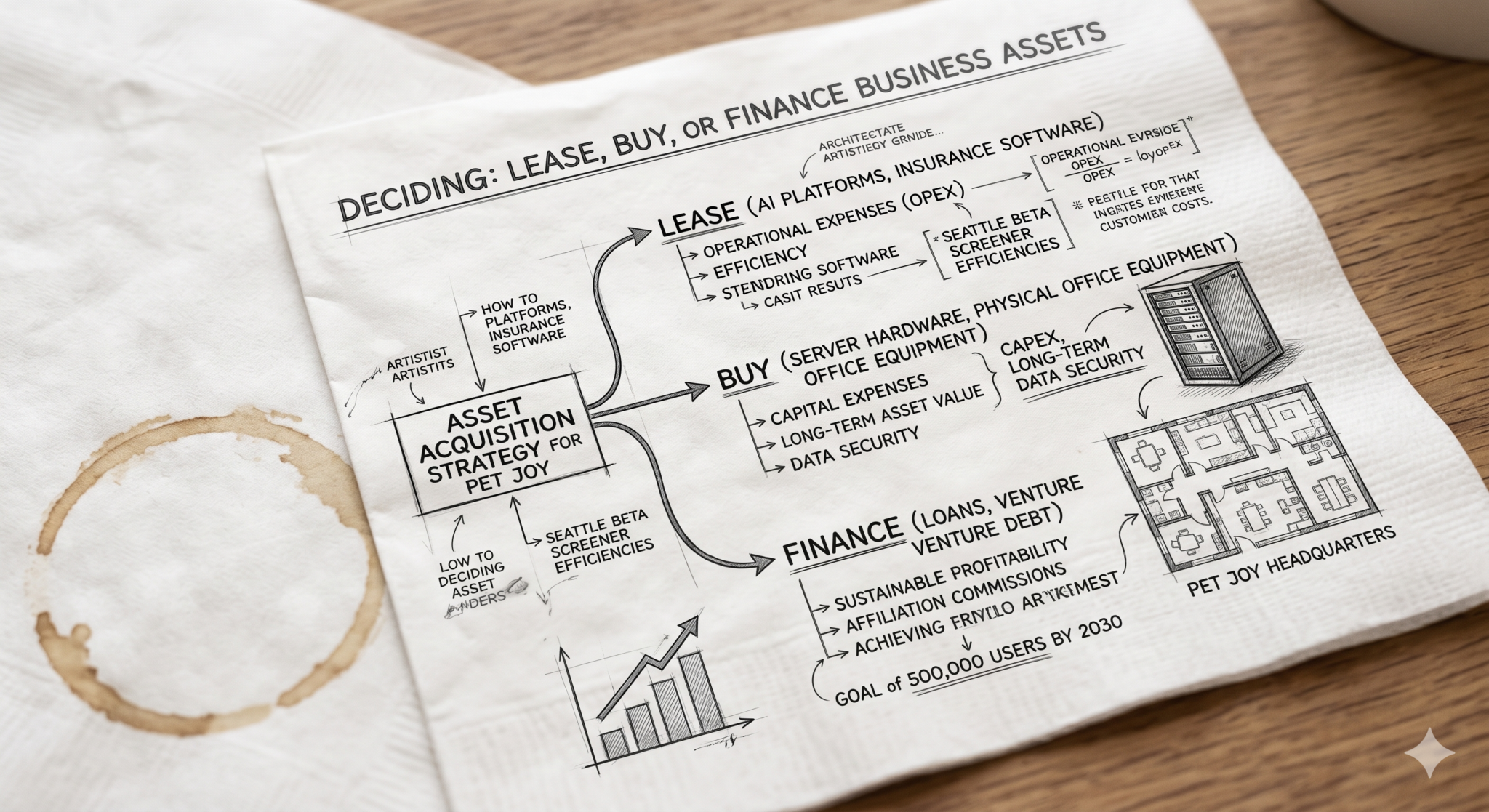
A good rule of thumb is this: lease when flexibility and upgrades matter, buy when long-term control and heavy use matter, and finance when ownership matters but cash flow needs protection.
That’s not a perfect formula, but it’s a useful starting point. The stronger decision comes from matching the asset to the business’s goals, cash position, risk tolerance, and growth plans. Real-world numbers beat wishful thinking every time.

Reviewed and edited by Albert Fang.
See a typo or want to suggest an edit/revision to the content? Use the contact us form to provide feedback.
At FangWallet, we value editorial integrity and open collaboration in curating quality content for readers to enjoy. Much appreciated for the assist.
Did you like our article and find it insightful? We encourage sharing the article link with family and friends to benefit as well - better yet, sharing on social media. Thank you for the support! 🍉
Article Title: How to Decide Whether to Lease, Buy, or Finance Business Assets
https://fangwallet.com/2026/06/02/how-to-decide-whether-to-lease-buy-or-finance-business-assets/The FangWallet Promise
FangWallet is an editorially independent resource - founded on breaking down challenging financial concepts for anyone to understand since 2014. While we adhere to editorial integrity, note that this post may contain references to products from our partners.
The FangWallet promise is always to have your best interest in mind and be transparent and honest about the financial picture.
Become an Insider
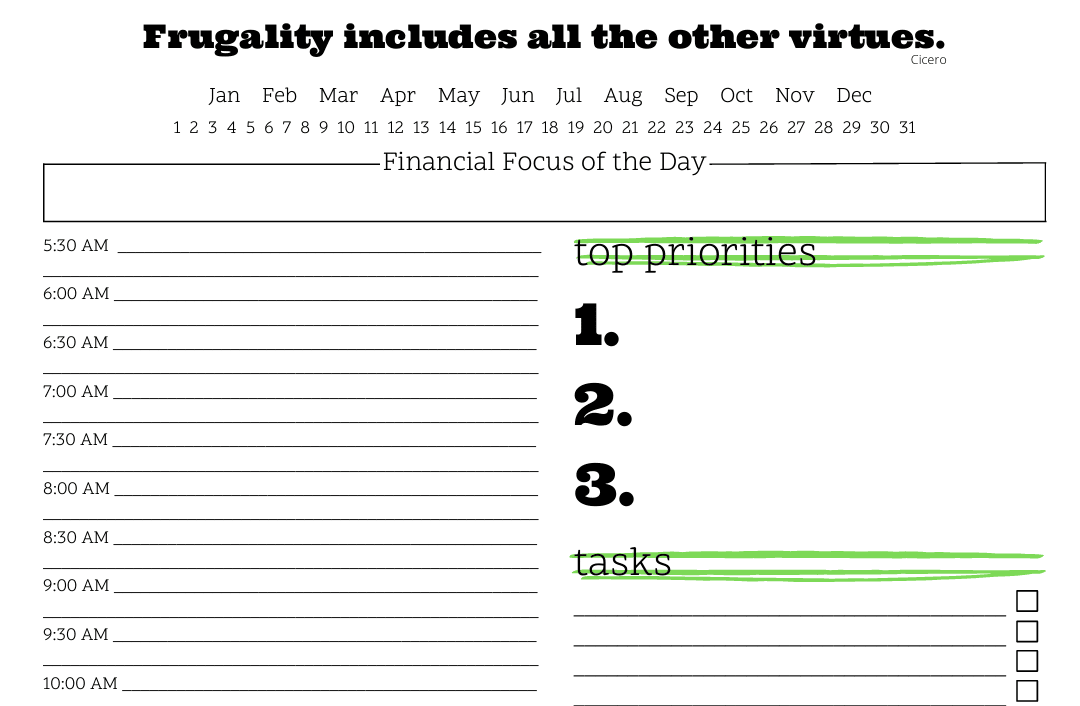
Subscribe to get a free daily budget planner printable to help get your money on track!
Make passive money the right way. No spam.
Editorial Disclaimer: The editorial content on this page is not provided by any of the companies mentioned. The opinions expressed here are the author's alone.
The content of this website is for informational purposes only and does not represent investment advice, or an offer or solicitation to buy or sell any security, investment, or product. Investors are encouraged to do their own due diligence, and, if necessary, consult professional advising before making any investment decisions. Investing involves a high degree of risk, and financial losses may occur including the potential loss of principal.
Source Citation References:
+ Inspo
There are no additional citations or references to note for this article at this time.