

This article may contain references to products or services from one or more of our advertisers or partners. We may receive compensation when you click on links to those products or services. Nonetheless, our opinions are our own.
The information presented in this article is accurate to the best of our knowledge at the time of publication. However, information is subject to change, and no guarantees are made about the continued accuracy or completeness of this content after its publication date.

Identifying debt consolidation pros and cons is the first step toward making a smarter financial decision when multiple balances start to feel unmanageable.
Monthly payments can stack up quickly, and juggling different due dates often leads to stress, missed payments, or growing interest costs.
Uncertainty often leads people to search for answers to their questions about loans, especially when multiple balances start competing for attention.
For some, refinancing loans becomes part of the conversation as a way to reshape existing debt into something more controlled.
A closer look at the loan process can shift perspective, turning confusion into a clearer view of timelines, terms, and expectations.
When pressure builds quickly, emergency loans may surface as a short-term response, even if they are not meant to solve the bigger financial picture.
Debt consolidation can simplify finances in the right circumstances. It can also create new challenges if used without clear knowledge of how it works. The sections below break down when consolidation works in your favor and when it may lead to added financial strain.
- What Debt Consolidation Really Means
- When Debt Consolidation Works in Your Favor
- Situations Where Consolidation May Fall Short
- The Difference Between Consolidation and Refinancing
- How the Loan Structure Impacts Outcomes
- When Emergency Borrowing Enters the Picture
- Warning Signs That Consolidation May Not Be the Right Move
- Making a Thoughtful Decision
- A Balanced Perspective on Debt Consolidation
- Recommended Reads
What Debt Consolidation Really Means
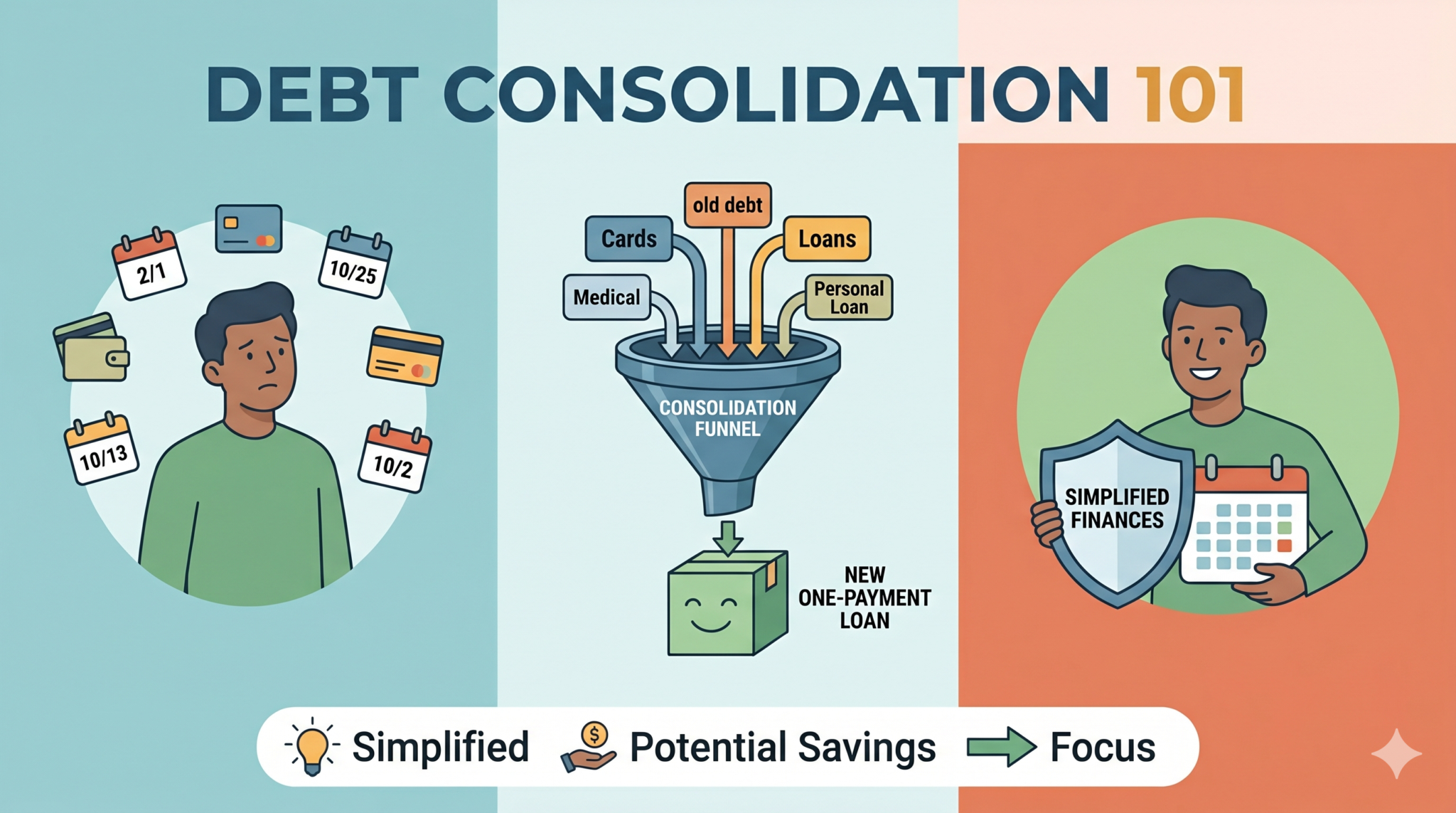
Debt consolidation combines multiple debts into a single payment. Instead of managing several accounts, borrowers make one monthly payment toward a new loan or credit line.
This approach often involves paying off credit cards, medical bills, or other unsecured debts using a new financing option. The goal is to replace scattered payments with one structured obligation.
Interest rates, repayment timelines, and total cost all depend on the terms of the new agreement. Some borrowers secure lower rates, while others focus on simplifying their payment schedule.
Consolidation does not eliminate debt. It reorganizes it. That distinction matters when evaluating whether it is the right move.
When Debt Consolidation Works in Your Favor
There are situations where consolidation creates real financial relief. One of the most common advantages is improved organization.
Managing one payment instead of several reduces the chance of missed deadlines. This can help protect credit standing and reduce late fees over time.
Lower interest rates can also make a difference. Borrowers with strong credit profiles may qualify for better terms than those attached to high-interest credit cards. Over time, this can reduce the total amount paid.
Predictable payments offer another benefit. Fixed monthly amounts make budgeting easier, which helps create stability after a period of financial stress.
Consolidation can also create momentum. A structured repayment plan gives borrowers a clear path forward, which can be motivating when dealing with multiple balances.
Situations Where Consolidation May Fall Short
Debt consolidation is not a universal solution. In some cases, it can create new financial pressure instead of relief.
Borrowers with lower credit scores may not qualify for favorable rates. Higher interest or added fees can increase the total cost of repayment.
Extending the loan term is another concern. Smaller monthly payments may look appealing at first, yet a longer timeline often results in paying more interest overall.
Spending habits also matter. If new debt accumulates after consolidation, the financial situation can worsen. Carrying both the new loan and additional balances creates a heavier burden than before.
Fees tied to certain loans can also reduce the benefits. Origination costs, penalties, or administrative charges should always be reviewed before committing to any agreement.
The Difference Between Consolidation and Refinancing
Some borrowers confuse consolidation with refinancing, yet they are not identical.
Refinancing loans typically replace a single existing loan with a new one that offers different terms. This may include a lower interest rate or adjusted repayment period.
Consolidation, on the other hand, combines multiple debts into one. The focus is on simplifying payments rather than modifying a single obligation.
In some cases, the two strategies overlap. A borrower might consolidate several debts into one new loan while also securing better terms. The outcome depends on credit history, income, and the lender’s criteria.
Knowing this distinction helps avoid confusion during the decision-making process.
Voted "Best Overall Budgeting App" by Forbes and WSJ
Monarch Money helps you budget, track spending, set goals, and plan your financial future—all in one app.
Get 50% OFF your first year with code MONARCHVIP


How the Loan Structure Impacts Outcomes
The details of a loan shape the overall result. Interest rates, repayment length, and fees all influence whether consolidation becomes beneficial.
Shorter loan terms usually mean higher monthly payments, yet they reduce the total interest paid. Longer terms offer smaller payments yet increase the overall cost.
Fixed rates create consistency, while variable rates can shift over time. Borrowers should evaluate which option is in keeping with their financial situation.
Reviewing the loan process also helps set expectations. From application to approval, each step reveals important details about repayment obligations and timelines.
Clarity at this stage reduces the chance of surprises later.
When Emergency Borrowing Enters the Picture
Financial stress does not always allow for long-term planning. Sudden expenses can force quick decisions.
In these cases, some individuals turn to emergency loans to cover immediate costs. This approach may solve a short-term problem, yet it does not take care of underlying debt.
Using emergency borrowing alongside consolidation can create complications. Taking on additional debt while trying to simplify existing balances may lead to conflicting financial goals.
Careful planning is needed when both strategies are considered at the same time.
Warning Signs That Consolidation May Not Be the Right Move
Certain financial patterns suggest that consolidation may not deliver the expected results.
Frequent reliance on credit for everyday expenses is one indicator. This often signals a bigger issue that consolidation alone cannot fix.
Irregular income can also create challenges. Consistent payments are required for most consolidation loans, and unstable earnings make that difficult to maintain.
High existing debt relative to income is another concern. Lenders may approve a loan, yet repayment could still strain the budget.
Recognizing these warning signs early can prevent decisions that lead to additional financial pressure.
Making a Thoughtful Decision
Choosing whether to consolidate debt requires careful evaluation. Every financial situation is different, and no single solution fits everyone.
Start by reviewing all current debts. Look at balances, interest rates, and monthly payments. This creates a clear picture of the starting point.
Compare potential loan offers side by side. Pay attention to total repayment cost, not just the monthly payment amount.
Ask direct questions before agreeing to any terms. Many borrowers have questions about loans that remain unanswered until it is too late. Taking the time to clarify details leads to better decisions.
Consider long-term financial goals as well. A short-term fix should not create long-term setbacks.
A Balanced Perspective on Debt Consolidation
Evaluating the debt consolidation pros and cons requires an honest look at both the benefits and the risks. Simplified payments, potential interest savings, and structured repayment can create real advantages.
At the same time, higher costs, extended timelines, or continued borrowing can limit those benefits. The outcome depends on how the strategy is used and the financial habits that follow.
A well-informed approach makes all the difference. Careful evaluation, realistic expectations, and disciplined repayment can turn consolidation into a useful financial tool instead of a costly misstep.

Reviewed and edited by Albert Fang.
See a typo or want to suggest an edit/revision to the content? Use the contact us form to provide feedback.
At FangWallet, we value editorial integrity and open collaboration in curating quality content for readers to enjoy. Much appreciated for the assist.
Did you like our article and find it insightful? We encourage sharing the article link with family and friends to benefit as well - better yet, sharing on social media. Thank you for the support! 🍉
Article Title: Debt Consolidation 101: When It Helps Your Finances and When It Doesn’t
https://fangwallet.com/2026/06/12/debt-consolidation-101/The FangWallet Promise
FangWallet is an editorially independent resource - founded on breaking down challenging financial concepts for anyone to understand since 2014. While we adhere to editorial integrity, note that this post may contain references to products from our partners.
The FangWallet promise is always to have your best interest in mind and be transparent and honest about the financial picture.
Become an Insider
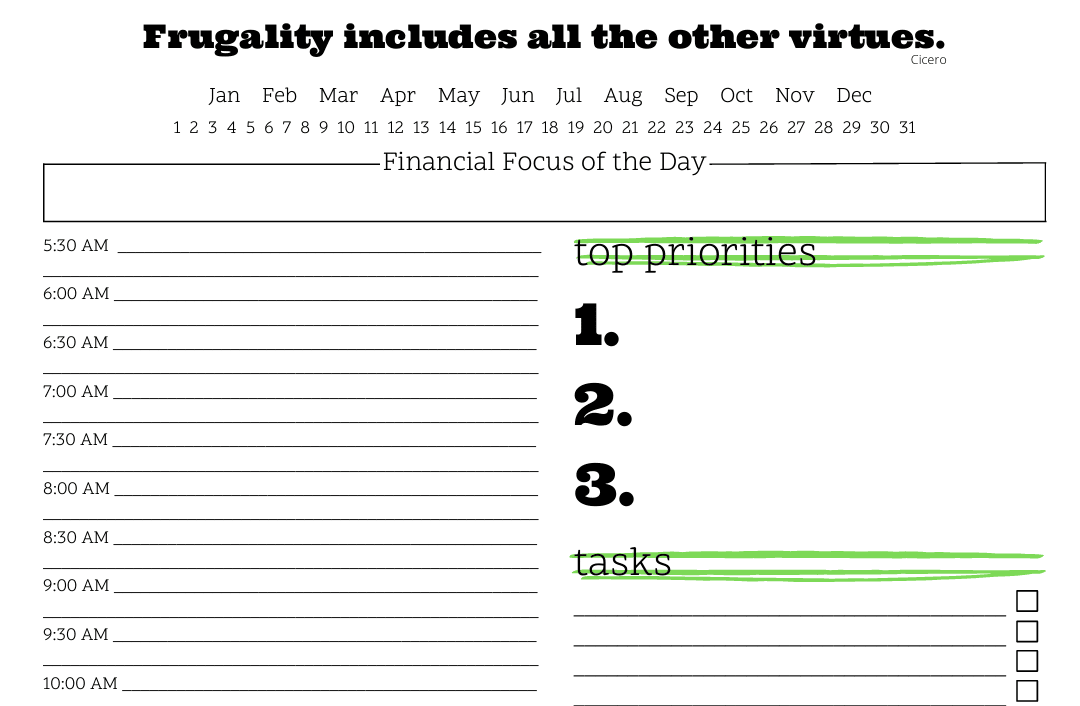
Subscribe to get a free daily budget planner printable to help get your money on track!
Make passive money the right way. No spam.
Editorial Disclaimer: The editorial content on this page is not provided by any of the companies mentioned. The opinions expressed here are the author's alone.
The content of this website is for informational purposes only and does not represent investment advice, or an offer or solicitation to buy or sell any security, investment, or product. Investors are encouraged to do their own due diligence, and, if necessary, consult professional advising before making any investment decisions. Investing involves a high degree of risk, and financial losses may occur including the potential loss of principal.
Source Citation References:
+ Inspo
There are no additional citations or references to note for this article at this time.