


This article may contain references to products or services from one or more of our advertisers or partners. We may receive compensation when you click on links to those products or services. Nonetheless, our opinions are our own.
The information presented in this article is accurate to the best of our knowledge at the time of publication. However, information is subject to change, and no guarantees are made about the continued accuracy or completeness of this content after its publication date.

- Biweekly vs. Monthly Mortgage Payments: The Real Math
- Two Things Called “Biweekly,” Only One of Them Saves Money
- The Real Math on a $400,000 Loan
- Why “Accelerated” Is Hard to Get Directly From a US Lender
- See Your Own Numbers Side by Side
- What Else to Check Before You Switch
- Common Questions About Biweekly Mortgage Payments
- Bottom Line
- Recommended Reads
Biweekly vs. Monthly Mortgage Payments: The Real Math
Switch to biweekly billing and pay off your mortgage years early. It’s one of the most repeated pieces of mortgage advice out there, and it’s only true for one specific version of biweekly billing. There’s a second version, also called biweekly, that changes nothing about how much you pay or when the loan ends. Knowing which one you’re looking at, before you sign up for anything, is the difference between a real strategy and a scheduling change that does nothing.
The confusion is understandable, because both versions split your payment into 26 smaller chunks a year instead of 12 larger ones. Only one of them sneaks in an extra payment. Here’s how to tell them apart, and what the savings actually look like once you run the numbers on a real loan.
Two Things Called “Biweekly,” Only One of Them Saves Money
Standard biweekly takes your monthly payment, multiplies it by 12, and divides that total by 26. You’re still paying the exact same amount over the course of a year, just in smaller, more frequent pieces. Nothing extra goes toward the loan, and the payoff date doesn’t move.
Accelerated biweekly takes your monthly payment and simply cuts it in half, then collects that half-payment every two weeks. Because a year has 26 two-week periods but only 24 half-months, those 26 half-payments add up to 13 full monthly payments instead of 12. That extra payment is what actually shortens the loan.
On a mortgage with a $2,000 monthly payment, the difference looks like this:
| Standard Biweekly | Accelerated Biweekly | |
|---|---|---|
| Payments Per Year | 26 | 26 |
| Amount Per Payment | About 923 | 1,000 |
| Annual Total Paid | 24,000 (same as 12 monthly payments) | 26,000 (equivalent of 13 monthly payments) |
| Extra Toward Principal Per Year | None | One full monthly payment |
If a lender or a third-party company offers to switch you to biweekly billing, ask directly which version it is. Plenty of marketing material uses the word “biweekly” as if it’s automatically the accelerated kind. It usually isn’t unless the program explicitly says so.
The Real Math on a $400,000 Loan
Here’s what the accelerated version actually does to a typical loan: $400,000 at 6.75% on a standard 30-year term, with an extra $216 a month, which is the dollar amount that reproduces an accelerated biweekly schedule on this particular loan size and rate.
| Standard 30-Year Payoff | With the Accelerated-Equivalent Extra Payment | |
|---|---|---|
| Loan Amount | 400,000 | 400,000 |
| Rate | 6.75% | 6.75% |
| Total Interest Paid | Full 30-year baseline | About 126,000 less |
| Payoff Timeline | Full 30-year term | About 6 years sooner |
That $216 a month works out to roughly one extra full mortgage payment spread evenly across 12 months instead of arriving as a single lump payment. The result is the same either way: the loan ends about six years early, and total interest drops by six figures. At today’s rates, that effect is larger than it would have been a few years ago, since more of every payment is currently going to interest rather than principal, especially in the early years of the loan. The higher the rate, the more a strategy like this is worth.
Voted "Best Overall Budgeting App" by Forbes and WSJ
Monarch Money helps you budget, track spending, set goals, and plan your financial future—all in one app.
Get 50% OFF your first year with code MONARCHVIP


Why “Accelerated” Is Hard to Get Directly From a US Lender
This is where the US market behaves differently from some other countries. In Canada, accelerated biweekly and accelerated weekly are standard, lender-offered features that show up as a simple dropdown menu on most mortgages. In the US, most lenders default to monthly billing only, and a formal accelerated biweekly product isn’t something most servicers offer out of the box.
That gap is exactly where third-party billing companies have stepped in, and it’s worth knowing the history before signing up for one. In 2015, the Consumer Financial Protection Bureau took legal action against a company called Nationwide Biweekly Administration, alleging it marketed a biweekly payment program as a free way to save money while actually charging setup and per-payment processing fees that ate up most or all of the promised savings. A separate CFPB action that same year targeted a different company over similar biweekly payment marketing claims. Typical third-party setup fees run somewhere between $200 and $400, plus a few dollars per payment after that, according to industry write-ups on these programs.
None of that means every biweekly program is a scam, and some lenders do offer a version directly at no cost. It does mean the fee is the thing to check first, because the underlying math doesn’t require paying anyone. The CFPB’s general guidance is that most borrowers can make extra principal payments without a fee, regardless of what a servicer’s official program looks like. Calling your servicer and asking them to apply a recurring extra amount to principal, or simply sending one additional payment a year on your own, produces the identical result as accelerated biweekly billing, for free.
See Your Own Numbers Side by Side
The $400,000 example above is already loaded in a free mortgage comparison tool, with the standard 30-year schedule and the accelerated-equivalent schedule running next to each other so the gap is visible month by month rather than just as a headline number. Swapping in a different loan amount, rate, or extra payment amount updates both schedules instantly. A second comparison loads three different early-payoff strategies side by side: a lump sum payment, a flat monthly extra payment, and a biweekly-equivalent extra payment on the same loan, which is useful if a one-time bonus or tax refund is part of the picture rather than a recurring monthly amount.
What Else to Check Before You Switch
A few details are worth confirming before changing how or how often you pay:
- Check for a prepayment penalty. These are rare on modern mortgages but more common on older loans or some non-conventional products. Your loan documents or servicer can confirm whether one applies
- Ask how extra payments get applied. Some servicers hold partial payments in a suspense account until they add up to a full payment rather than crediting them immediately to principal. Get this in writing before assuming your extra payment is working the way you expect
- Confirm the extra amount is marked for principal. If a payment isn’t specifically designated as an extra principal payment, some servicers may apply it toward the next regular payment instead, which doesn’t shorten the loan
- Weigh the opportunity cost. Money sent to principal is locked into the house. If there’s higher-interest debt elsewhere, or no emergency fund yet, that may be a better use of the same $216 a month than an early mortgage payoff
Common Questions About Biweekly Mortgage Payments
Does paying biweekly always save money
No. Standard biweekly billing, which just splits the same annual amount into smaller, more frequent payments, saves nothing and doesn’t change the payoff date. Only the accelerated version, which adds the equivalent of one extra monthly payment per year, produces real savings.
How much faster does accelerated biweekly pay off a 30-year loan
It typically shaves three to four years, sometimes more, depending on the loan size, rate, and how early the extra payments start. On the $400,000 example above, the loan finished about six years early.
Can I set this up without my lender’s official biweekly program
Yes. Asking your servicer to apply a recurring extra amount to principal, or sending one additional payment a year, reproduces the same outcome as accelerated biweekly billing without enrolling in any special program or paying a setup fee.
Is there a minimum extra payment that actually moves the numbers
No fixed minimum, but the effect scales with the amount. Even $100 to $150 a month makes a measurable dent in total interest on a typical 30-year loan, while an amount close to one-twelfth of the full monthly payment reproduces the standard accelerated biweekly result.
What happens if I miss a payment under a biweekly schedule
If you’ve set this up yourself through extra principal payments rather than a formal biweekly program, missing one simply means that month’s extra payment doesn’t happen, with no penalty beyond a smaller interest savings for that period. If you’re enrolled in a third-party biweekly service, check the program’s specific terms, since some structure payments differently.
Bottom Line
The word “biweekly” on its own doesn’t tell you anything about whether a payment plan will save money. The accelerated version does, because it quietly adds a thirteenth payment to the year. The standard version doesn’t, because it’s only a timing change. Either strategy is simple enough to replicate for free directly with most servicers, and running the actual schedule, rather than taking a billing plan’s name at face value, is the only way to know which one you’re really being offered.

Reviewed and edited by Albert Fang.
See a typo or want to suggest an edit/revision to the content? Use the contact us form to provide feedback.
At FangWallet, we value editorial integrity and open collaboration in curating quality content for readers to enjoy. Much appreciated for the assist.
Did you like our article and find it insightful? We encourage sharing the article link with family and friends to benefit as well - better yet, sharing on social media. Thank you for the support! 🍉
Article Title: Biweekly vs. Monthly Mortgage Payments: The Real Math
https://fangwallet.com/2026/07/18/biweekly-vs-monthly-mortgage-payments-real-math/The FangWallet Promise
FangWallet is an editorially independent resource - founded on breaking down challenging financial concepts for anyone to understand since 2014. While we adhere to editorial integrity, note that this post may contain references to products from our partners.
The FangWallet promise is always to have your best interest in mind and be transparent and honest about the financial picture.
Become an Insider
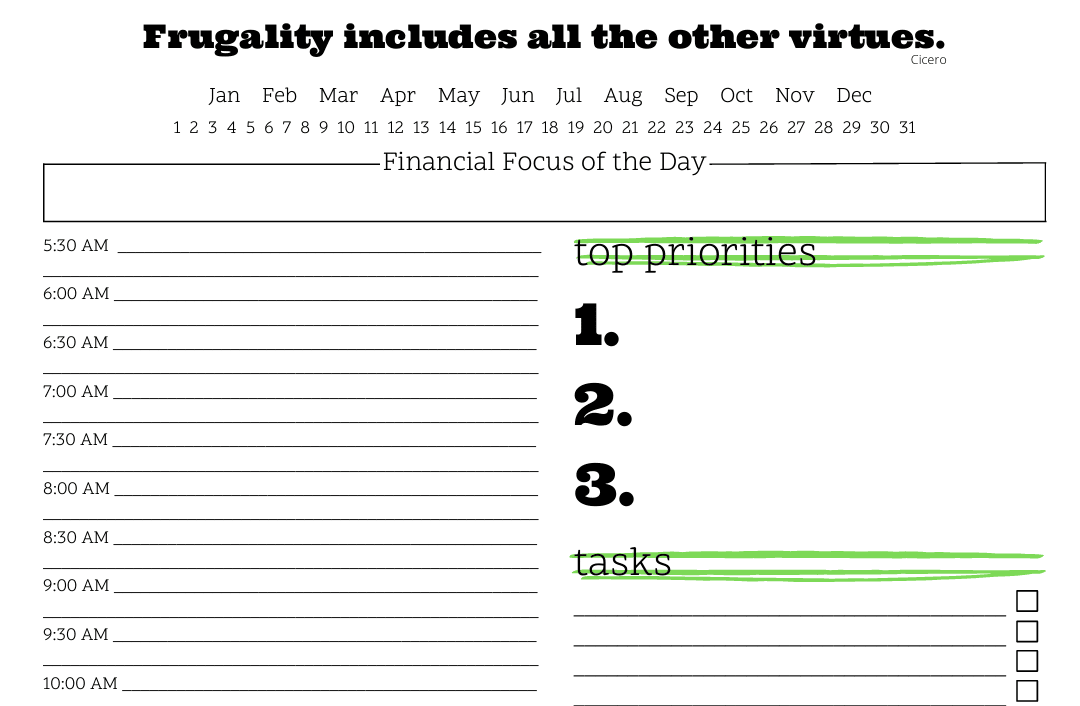
Subscribe to get a free daily budget planner printable to help get your money on track!
Make passive money the right way. No spam.
Editorial Disclaimer: The editorial content on this page is not provided by any of the companies mentioned. The opinions expressed here are the author's alone.
The content of this website is for informational purposes only and does not represent investment advice, or an offer or solicitation to buy or sell any security, investment, or product. Investors are encouraged to do their own due diligence, and, if necessary, consult professional advising before making any investment decisions. Investing involves a high degree of risk, and financial losses may occur including the potential loss of principal.
Source Citation References:
+ Inspo
There are no additional citations or references to note for this article at this time.