
This article may contain references to products or services from one or more of our advertisers or partners. We may receive compensation when you click on links to those products or services. Nonetheless, our opinions are our own.
The information presented in this article is accurate to the best of our knowledge at the time of publication. However, information is subject to change, and no guarantees are made about the continued accuracy or completeness of this content after its publication date.

A proposed suspension or removal can turn a steady federal paycheck into a retirement worry. You may be calculating missed income, legal fees and whether your Federal Employees Retirement System (FERS) pension could disappear.
Understanding the financial cost of federal disciplinary actions requires distinguishing pension forfeiture from other retirement consequences. Your circumstances determine which rights and representation options may apply.
- Most Federal Disciplinary Actions Don’t Jeopardize Your FERS Pension
- Which Disciplinary Actions Actually Put Your Pension at Risk
- The Real Dollar Cost of Contesting a Federal Disciplinary Action
- How to Protect Your Career and Your Pension During a Dispute
- How to Find an Experienced Federal Employment Law Attorney in New York
- Frequently Asked Questions
- Protect Your Career and Your Pension
- Recommended Reads
Most Federal Disciplinary Actions Don’t Jeopardize Your FERS Pension
A reprimand, suspension or removal generally leaves earned FERS pension rights intact, while eligibility for payments depends on the applicable retirement rules. Your age, creditable service and circumstances of separation determine which benefits may be available.
The standard framework generally requires at least five years of civilian service creditable under FERS. If you leave before qualifying for immediate retirement, a deferred annuity may provide payments later, subject to eligibility requirements. Under the basic five-year deferred-retirement provision, payments begin on the first day of the month after you reach age 62.
Eligible military service can be counted under separate crediting rules, while the general five-year requirement applies to civilian service. With at least 10 years of service, other provisions may allow deferred payments at your minimum retirement age, subject to additional conditions.
An earlier-than-planned departure may leave a gap between your final paycheck and retirement payments. The length of that gap affects how long another income source would need to cover household expenses.
Removal for cause on misconduct or delinquency charges excludes you from discontinued-service retirement, even when you meet its age and service thresholds. Other retirement provisions require a separate eligibility assessment.
Which Disciplinary Actions Actually Put Your Pension at Risk
Federal forfeiture provisions establish separate grounds for withholding retirement benefits following certain criminal convictions. Covered offenses include specified violations of espionage and atomic energy laws that may result in the loss of retirement pay. Additional statutory exceptions may apply.
Ordinary reprimands and suspensions generally preserve accrued pension rights, while criminal-forfeiture provisions require the conditions specified in the applicable law. Removal alone generally does not establish those conditions.
When criminal allegations accompany an employment dispute, the particular offense and governing statute require individual review. An allegation alone does not establish a conviction or pension forfeiture. Reviewing the employment action alongside any criminal matter can clarify which retirement questions actually arise from the circumstances.
The Real Dollar Cost of Contesting a Federal Disciplinary Action
A case-specific discussion can address the income at stake, proposed fees and work involved at each stage. For a proposed suspension, that conversation may focus on the unpaid period, while removal raises broader questions about future earnings. Reported Merit Systems Protection Board (MSPB) figures provide background on the scale and outcomes of employment proceedings:
- Attorney-fee payments: Payouts in certain settled cases reached nearly $11 million, illustrating the financial scale of fee awards across multiple disputes.
- Settlement frequency: Agencies settled 68% of nondismissed adverse-action cases in the reported figures. This percentage describes outcomes within that selected group.
- Contested decisions: When agencies contested claims, they won more than 80% of decisions. The figure concerns cases that proceeded to a decision.
The published summary omits a precise fiscal-year range for the fee total and clear observation periods for the percentages. Those limitations restrict their value for estimating your expenses or prospects. A government payout total also measures a different financial obligation from the fees an employee agrees to pay.
An agency response, an MSPB hearing and a court appeal can involve separate engagements. The written fee agreement can define the services and proposed charges for the work under consideration.
A potential resolution may involve back pay, compensatory damages or attorney fees, each addressing a different part of the dispute. A discussion of possible relief can distinguish replacing lost income from recovering representation costs.
Voted "Best Overall Budgeting App" by Forbes and WSJ
Monarch Money helps you budget, track spending, set goals, and plan your financial future—all in one app.
Get 50% OFF your first year with code MONARCHVIP


How to Protect Your Career and Your Pension During a Dispute
Understanding your rights early may help preserve a cause of action before procedural choices restrict available options. A consultation can address how the proposed action may affect your retirement eligibility.
Military service can introduce another set of rights under the Uniformed Services Employment and Reemployment Rights Act (USERRA). The law prohibits employment discrimination based on past, present or future military service and protects service members’ reemployment rights.
In fiscal year 2025, VETS received 1,256 new USERRA complaints and investigated 1,543 total USERRA cases. VETS completed 99.9% of its investigations within the 90-day statutory deadline or an extension of time agreed to by the claimant. These figures cover multiple employment sectors. A discussion of your options can address several distinct questions:
- Available processes: The employment issue determines which route for relief may apply. Agency proceedings, administrative appeals and discrimination complaints can raise different representation needs.
- Retirement timing: Your age and creditable service help determine the relevant eligibility conditions. Comparing possible separation dates with those conditions can clarify when a benefit might become payable.
- Future benefit growth: Separation generally halts additional service credit accrual, subject to limited exceptions. An earlier departure can therefore affect both the benefit you ultimately receive and your current income.
- Military-service connection: A consultation can explore whether the disputed action relates to your past, present or future military service. USERRA coverage depends on how the facts meet the statute’s requirements.
How to Find an Experienced Federal Employment Law Attorney in New York
If you’re comparing New York federal employment law attorneys, relevant case experience, responsiveness and practice-area fit are common evaluation factors. Clear information about the scope of representation and fees can show which proceedings the engagement covers.
1. Tully Rinckey PLLC

From agency proceedings to the full MSPB panel, Tully Rinckey PLLC attorneys have litigated hundreds of MSPB-related cases. Their work includes appearances before MSPB administrative judges.
At the appellate level, the firm’s experience extends to MSPB appeals before the United States Court of Appeals for the Federal Circuit. Its one-hour initial consultation provides time to discuss your circumstances, the employment issues involved and potential representation across the relevant stages of your dispute.
Key features:
- MSPB litigation experience
- Agency proceeding representation
- Federal Circuit appellate experience
2. Gilbert Employment Law, P.C.

Gilbert Employment Law, P.C. represents federal employees nationwide and internationally in employment discrimination, disciplinary and retirement-related matters. Representation includes Equal Employment Opportunity Commission (EEOC) matters, MSPB proceedings and whistleblower claims before the Office of Special Counsel (OSC).
For retirement disputes, its services extend to applications to the Office of Personnel Management and reconsideration proceedings. Its retirement-related work provides a benchmark if an agency decision also affects your benefits.
Key features:
- Nationwide federal employee representation
- EEOC matter support
- Whistleblower claim representation
3. Solomon Law Firm, PLLC

With offices in Albany, New York, as well as New York City and Washington, Solomon Law Firm, PLLC represents federal employees. Its work spans administrative and federal court proceedings.
Adverse-action representation includes MSPB disputes involving demotions, suspensions and removals, while its broader federal employment services cover EEOC complaints and OSC whistleblower matters. Your consultation can focus on which services match the action you face and the relief you seek.
Key features:
- New York office access
- MSPB dispute representation
- Federal court proceeding experience
Frequently Asked Questions
Retirement timing, potential pension consequences and representation costs can each influence how you assess a disciplinary dispute. The proposed action and your service history provide starting points for that assessment.
Q: Can a disciplinary action take away your FERS pension?
A: Ordinary discipline generally preserves earned pension rights, while certain criminal convictions can trigger separate forfeiture provisions. Separation may also affect retirement timing and future service credit.
Q: What to look for in a federal employment law attorney
A: Relevant dispute experience, responsiveness and practice-area fit provide useful comparison points. Clear explanations of fees and the proposed engagement can also help you assess the financial commitment.
Q: Do you need an attorney for a minor reprimand?
A: A minor reprimand alone generally leaves earned pension rights intact. Your dispute’s circumstances, potential employment consequences and proposed legal costs determine whether representation may be worthwhile.
Protect Your Career and Your Pension
Retirement eligibility, future service credit and dispute costs shape your financial position during a contested federal employment dispute. Understanding the available rights early may help preserve a cause of action as you consider your next steps. Qualified counsel can explain how the dispute may affect your career and retirement plans.

Reviewed and edited by Albert Fang.
See a typo or want to suggest an edit/revision to the content? Use the contact us form to provide feedback.
At FangWallet, we value editorial integrity and open collaboration in curating quality content for readers to enjoy. Much appreciated for the assist.
Did you like our article and find it insightful? We encourage sharing the article link with family and friends to benefit as well - better yet, sharing on social media. Thank you for the support! 🍉
Article Title: The Financial Cost of Federal Disciplinary Actions (and How to Protect Your FERS Pension)
https://fangwallet.com/2026/11/17/the-financial-cost-of-federal-disciplinary-actions/The FangWallet Promise
FangWallet is an editorially independent resource - founded on breaking down challenging financial concepts for anyone to understand since 2014. While we adhere to editorial integrity, note that this post may contain references to products from our partners.
The FangWallet promise is always to have your best interest in mind and be transparent and honest about the financial picture.
Become an Insider
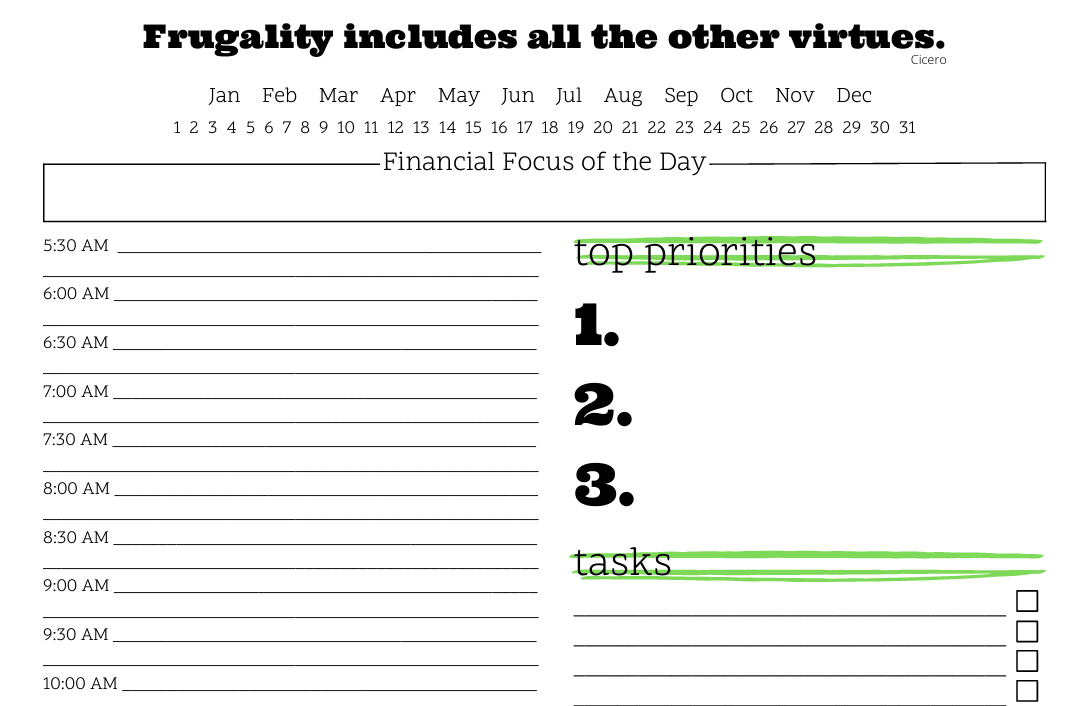
Subscribe to get a free daily budget planner printable to help get your money on track!
Make passive money the right way. No spam.
Editorial Disclaimer: The editorial content on this page is not provided by any of the companies mentioned. The opinions expressed here are the author's alone.
The content of this website is for informational purposes only and does not represent investment advice, or an offer or solicitation to buy or sell any security, investment, or product. Investors are encouraged to do their own due diligence, and, if necessary, consult professional advising before making any investment decisions. Investing involves a high degree of risk, and financial losses may occur including the potential loss of principal.
Source Citation References:
+ Inspo
There are no additional citations or references to note for this article at this time.