


This article may contain references to products or services from one or more of our advertisers or partners. We may receive compensation when you click on links to those products or services. Nonetheless, our opinions are our own.
The information presented in this article is accurate to the best of our knowledge at the time of publication. However, information is subject to change, and no guarantees are made about the continued accuracy or completeness of this content after its publication date.

Net worth benchmarks by age are widely Googled but rarely understood. A look at the real numbers and why tracking matters more than comparing.
If you have ever searched “average net worth by age” at midnight, you are in very large company. It is one of the most consistently searched personal finance queries in the United States, with traffic that has climbed every year since 2019. People want to know where they stand. More specifically, they want to know where they stand relative to everyone else.
The numbers they find are real but rarely helpful without context. According to the Federal Reserve’s most recent Survey of Consumer Finances, the median net worth for American households under 35 is approximately $39,000. For households between 35 and 44, it jumps to roughly $135,000. Between 45 and 54, it reaches about $247,000. And for the 55-to-64 bracket, the median sits around $364,000.
Those are medians, not averages. The averages are dramatically higher because they are pulled upward by the wealthiest households in each bracket. The average net worth for the under-35 group, for example, is over $120,000. The difference between $39,000 and $120,000 tells you more about wealth concentration than about where most young adults actually land.
The benchmarking instinct is natural. People want a yardstick. They want to know if they are ahead, behind, or on track. But the fixation on comparison often obscures the more useful question: is my own number moving in the right direction?
“Benchmarks give you a snapshot of the population. They do not give you a financial plan,” said Dr. Lisa Greenwald, a researcher at the American Institute for Economic Research who studies household wealth. “Your net worth at 30 is a function of when you started earning, where you live, whether you went to graduate school, whether you inherited anything, and a dozen other variables that no age-based table can account for.”
What benchmarks can do is establish a baseline awareness. If you are 35 and your net worth is negative, that is useful information, not because it means you have failed, but because it means your liabilities currently outweigh your assets and that is worth understanding clearly. If you are 45 and your net worth has tripled in the past decade, that is also useful. It means whatever you are doing is working, even if the number is below the national median.
The challenge has always been that knowing the benchmarks is easy. Knowing your own number is harder. It requires adding up every account, every asset, every debt, and arriving at a single figure. For most people, that exercise happens once, maybe twice, and then drifts.
This is where the new generation of personal finance tools enters the picture. Brevizo, a net worth tracking app, is built around making that calculation simple enough to repeat. Users enter their assets and liabilities into a dashboard. The app calculates net worth automatically, tracks it over time, and displays the trend so users can see whether their number is moving up, down, or sideways.
The emphasis on trend over snapshot is intentional. A single net worth calculation is interesting but limited. It tells you where you are on one day. A series of calculations, tracked monthly or quarterly, tells you something much more valuable: velocity and direction.
“Your net worth on any given day is just a number,” said Kevin Moore, a certified financial planner based in Portland. “Your net worth over 24 months is a story. It shows you whether your decisions are working. Are you paying down debt faster than you are accumulating it? Are your assets growing? Is the gap widening in the right direction? You cannot answer those questions with a single snapshot.”
The Brevizo dashboard is designed around this idea. It breaks assets into categories, including cash, investments, real estate, vehicles, and personal property, and liabilities into their own set, covering mortgages, student loans, credit cards, auto loans, and other debts. The visual display shows both the total net worth figure and the composition underneath it, so users can see not just the number but what is driving it.
The manual entry model means users control the inputs. There are no bank connections, no automated feeds, and no third-party data sharing. The tradeoff is a few minutes of data entry each time you update. The benefit is that every number in the system is one you put there yourself, on your own terms.
For the people searching “net worth by age” at midnight, the benchmarks can serve as a starting point. They can prompt the question. But the answer, the one that actually matters, comes from knowing your own number and watching it over time.
The median net worth for your age group is a fact about the population. Your net worth, tracked month over month, is a fact about you. One of those is interesting. The other is actionable.
The first step in either case is the same: sit down and add it up. Everything you own, everything you owe, and the difference between them. It takes less time than you think. And the number you get back, whatever it is, is the most honest assessment of your financial life that exists.
Start there. Watch the trend. The benchmarks will take care of themselves.
Voted "Best Overall Budgeting App" by Forbes and WSJ
Monarch Money helps you budget, track spending, set goals, and plan your financial future—all in one app.
Get 50% OFF your first year with code MONARCHVIP


Recommended Reads
- E*Trade vs Wealthfront in 2025-2026 Compared: Which is Best? Investing
- Direct Advertising: Is It Better Than Digital Marketing? Business
- Acorns vs Wealthfront 2025-2026: Which Robo-Advisor is Best? Investing
- Poppins Payroll vs SurePayroll Review Comparison (2025-2026): Pros and Cons Reviews
- Financial Planner Job Description: How to Become a Certified Expert Beginner's Guides
- MoneyLion vs Varo Comparison: Which App is Best? Banking
- Home Equity Loan Pros and Cons: Smart Borrowing or Risky Move? Investing
- Remote Coding Bootcamp: Learn to Code from Anywhere Career
- Beginner's Guide: Working for Uber vs. Lyft - Pros & Cons in 2025 Make Money
- How to Turn Your E-Commerce Side Hustle into a Full-Time Income Side Hustle

Reviewed and edited by Albert Fang.
See a typo or want to suggest an edit/revision to the content? Use the contact us form to provide feedback.
At FangWallet, we value editorial integrity and open collaboration in curating quality content for readers to enjoy. Much appreciated for the assist.
Did you like our article and find it insightful? We encourage sharing the article link with family and friends to benefit as well - better yet, sharing on social media. Thank you for the support! 🍉
Article Title: What Is Your Net Worth Supposed to Be? Here Is What the Data Actually Says.
https://fangwallet.com/2026/08/21/what-is-your-net-worth-supposed-to-be-here-is-what-the-data-actually-says/The FangWallet Promise
FangWallet is an editorially independent resource - founded on breaking down challenging financial concepts for anyone to understand since 2014. While we adhere to editorial integrity, note that this post may contain references to products from our partners.
The FangWallet promise is always to have your best interest in mind and be transparent and honest about the financial picture.
Become an Insider
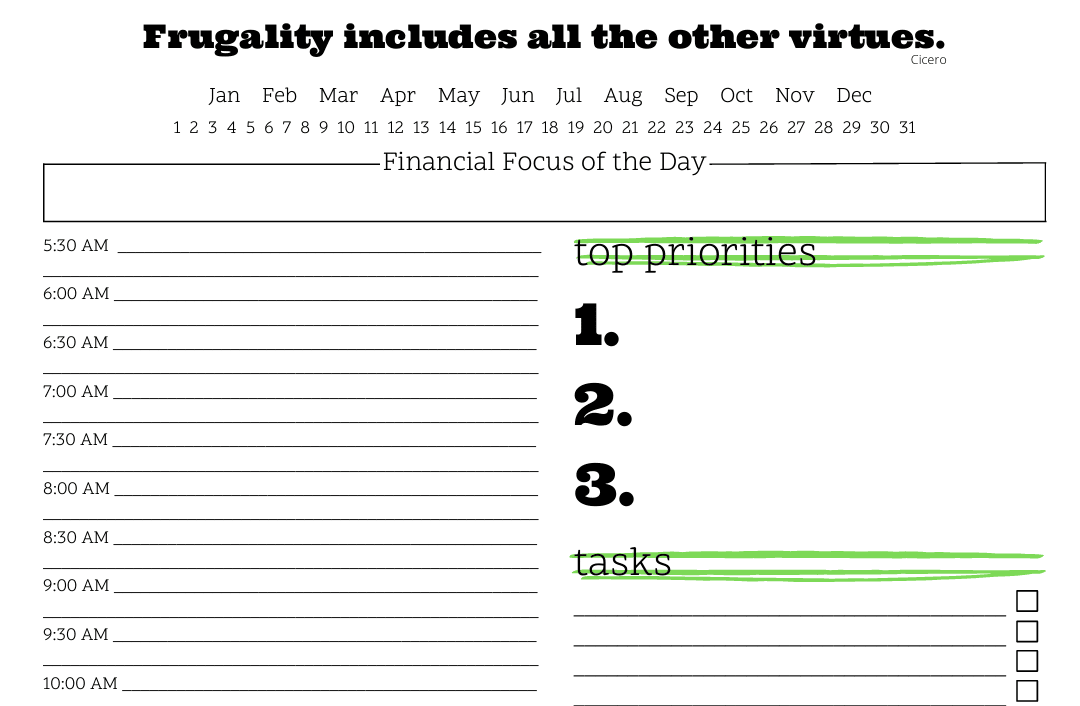
Subscribe to get a free daily budget planner printable to help get your money on track!
Make passive money the right way. No spam.
Editorial Disclaimer: The editorial content on this page is not provided by any of the companies mentioned. The opinions expressed here are the author's alone.
The content of this website is for informational purposes only and does not represent investment advice, or an offer or solicitation to buy or sell any security, investment, or product. Investors are encouraged to do their own due diligence, and, if necessary, consult professional advising before making any investment decisions. Investing involves a high degree of risk, and financial losses may occur including the potential loss of principal.
Source Citation References:
+ Inspo
There are no additional citations or references to note for this article at this time.